
Quick Overview
- Why comfort matters in safety footwear
- Features that make safety toe shoes comfortable
- Steel toe vs composite toe for comfort
- Who needs comfortable safety shoes the most?
- Common comfort mistakes buyers make
- How to choose the right safety toe shoes
- FAQs about comfortable safety toe footwear
Comfort and Safety Can Go Together
For years, workers accepted an uncomfortable reality.
If you wanted protection, you wore heavy, stiff safety boots.
If you wanted comfort, you wore regular shoes.
Fortunately, those days are largely gone.
Modern safety toe shoes have evolved dramatically. Manufacturers now combine workplace protection with athletic-inspired comfort features, creating footwear that can handle industrial hazards while remaining comfortable throughout long shifts.
And that’s important.
Because whether you’re walking warehouse aisles, climbing ladders, operating machinery, or working on construction sites, uncomfortable footwear can wear you down long before the work does.
The best safety toe shoes protect your feet without constantly reminding you they’re there.
Why Comfort Matters in Safety Footwear
Some people view comfort as a luxury.
It’s not.
Comfort directly affects:
- Productivity
- Focus
- Worker satisfaction
- Fatigue levels
- Overall workplace safety
Think about a typical workday.
A warehouse employee may walk several miles during a shift.
A construction worker spends hours standing on concrete.
A manufacturing technician may remain on their feet for most of the day.
When footwear causes discomfort, the effects spread beyond sore feet.
Poor footwear can contribute to:
- Knee pain
- Back pain
- Ankle strain
- Reduced concentration
That’s why comfort should be a key factor when choosing safety shoes.
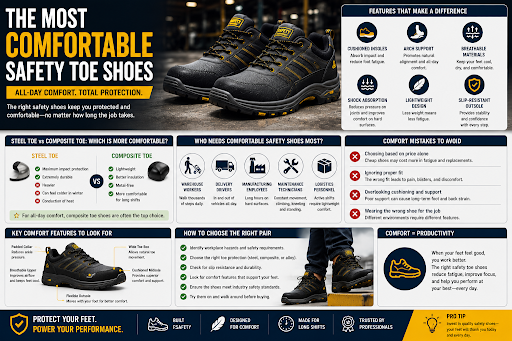
What Makes a Safety Toe Shoe Comfortable?
Not all comfort features are obvious.
Some of the most important elements are hidden inside the shoe.
Cushioned Insoles
Modern safety shoes often include advanced cushioning systems designed to absorb impact and reduce foot fatigue.
Quality insoles help distribute pressure evenly across the foot.
This becomes especially important during long shifts.
Lightweight Construction
Weight matters more than many buyers realize.
Every extra ounce adds up over thousands of steps.
That’s one reason lightweight safety shoes have become increasingly popular.
Workers who spend all day moving often notice the difference immediately.
Proper Arch Support
Good arch support helps maintain natural foot alignment.
Benefits include:
- Better posture
- Reduced foot strain
- Less lower back discomfort
- Improved long-term comfort
Workers with flat feet or high arches should pay particular attention to this feature.
Breathable Materials
Hot, sweaty feet are uncomfortable.
They can also contribute to blisters and skin irritation.
Many modern safety toe shoes use:
- Mesh panels
- Moisture-wicking linings
- Ventilated uppers
These features improve airflow and help regulate temperature.
Shock Absorption
Hard surfaces such as concrete place repeated stress on the body.
Shock-absorbing midsoles help reduce impact during walking and standing.
Over time, this can make a noticeable difference in overall comfort.
Steel Toe vs Composite Toe: Which Is More Comfortable?
This is one of the most common questions buyers ask.
The answer depends on your priorities.
Steel Toe Safety Shoes
Advantages:
- Excellent impact protection
- High durability
- Slim toe profile
Considerations:
- Heavier than composite alternatives
- Can feel colder in winter
- May conduct heat more readily
Composite Toe Safety Shoes
Advantages:
- Lightweight
- Better insulation
- Metal-free construction
- Greater comfort for long walking shifts
Considerations:
- Slightly bulkier toe area in some designs
Many workers focused on comfort prefer composite toe footwear because it reduces weight without sacrificing certified protection.
Who Benefits Most From Comfortable Safety Toe Shoes?
Almost everyone.
But some workers depend on comfort more than others.
Warehouse Workers
Warehouse employees often walk between 10,000 and 20,000 steps per day.
Lightweight footwear helps reduce fatigue significantly.
Delivery Drivers
Drivers frequently enter and exit vehicles while carrying packages.
Flexible, comfortable safety shoes support mobility throughout the day.
Manufacturing Employees
Many manufacturing workers stand on hard surfaces for extended periods.
Proper cushioning and support become critical.
Maintenance Technicians
Technicians often alternate between walking, climbing, kneeling, and standing.
Comfort and flexibility help support these movements.
Logistics Personnel
Large distribution centers require constant movement.
Athletic-style safety footwear has become increasingly popular in these environments.
Features Buyers Often Overlook
Some comfort features don’t get enough attention.
Flexible Soles
A flexible sole allows more natural foot movement.
This can reduce fatigue during active work.
Wide Toe Box
Crowded toes often lead to discomfort.
A wider toe box allows natural toe movement while maintaining protection.
Padded Collar and Tongue
Small details matter.
Extra padding around the ankle and tongue area helps reduce pressure points.
Lightweight Outsoles
Modern rubber compounds provide traction without excessive weight.
That’s a win-win for comfort and safety.
Common Mistakes When Buying Comfortable Safety Shoes
Choosing Protection Without Considering Comfort
Protection is essential.
But footwear that causes pain may affect productivity and worker compliance.
A balance is important.
Buying Based on Appearance Alone
Athletic-style designs look appealing.
However, appearance should never replace proper safety certifications.
Always verify compliance with workplace requirements.
Ignoring Fit
Even the most comfortable safety shoe will feel uncomfortable if it doesn’t fit properly.
Always check:
- Length
- Width
- Heel security
- Toe room
Fit matters as much as design.
Selecting the Wrong Shoe for the Job
Different jobs require different footwear.
A lightweight warehouse shoe may not perform well on a rugged construction site.
Match footwear to workplace hazards.
The Rise of Athletic Safety Shoes
One of the biggest trends in safety footwear is the growth of athletic-inspired designs.
Today’s safety shoes often resemble running shoes more than traditional work boots.
Workers increasingly prefer:
- Lightweight construction
- Flexible designs
- Sport-inspired styling
- Enhanced cushioning
The result?
Footwear that delivers protection without the bulky feel associated with older work boots.
This trend is particularly strong among warehouse workers, logistics personnel, and manufacturing employees.
How to Choose the Most Comfortable Safety Toe Shoes
Before making a purchase, ask yourself:
How much walking do I do each day?
Workers who walk frequently should prioritize lightweight designs and cushioning.
What hazards exist in my workplace?
The level of protection required will influence toe cap selection and outsole design.
Do I work indoors or outdoors?
Environmental conditions affect comfort and material choices.
Will I stand for long periods?
If yes, look for superior shock absorption and arch support.
What certifications are required?
Always verify compliance with workplace safety regulations.
Final Thoughts
The most comfortable safety toe shoes combine protection, support, durability, and all-day wearability.
Gone are the days when workers had to choose between safety and comfort.
Modern safety footwear delivers both.
Whether you’re working in warehousing, logistics, manufacturing, maintenance, or construction, the right pair of safety toe shoes can reduce fatigue, improve productivity, and make every shift more comfortable.
And when you’re spending eight, ten, or even twelve hours on your feet, that comfort matters more than most people realize.
FAQs About Comfortable Safety Toe Shoes
1. What are the most comfortable types of safety toe shoes?
Composite toe safety shoes are often considered the most comfortable because they are lightweight and provide excellent protection.
2. Are steel toe shoes less comfortable than composite toe shoes?
Steel toe shoes can feel heavier, especially during long shifts, while composite toe shoes are generally lighter and better insulated.
3. What features improve comfort in safety shoes?
Cushioned insoles, arch support, shock absorption, breathable materials, and lightweight construction all contribute to comfort.
4. Are athletic-style safety shoes safe for industrial work?
Yes, provided they meet recognized safety standards such as ASTM F2413 or EN ISO 20345.
5. How can I reduce foot fatigue during long work shifts?
Choose safety shoes with proper cushioning, arch support, shock absorption, and a comfortable fit tailored to your work environment.
As a professional safety shoes manufacturer, zstep provide good safety shoes for you!