
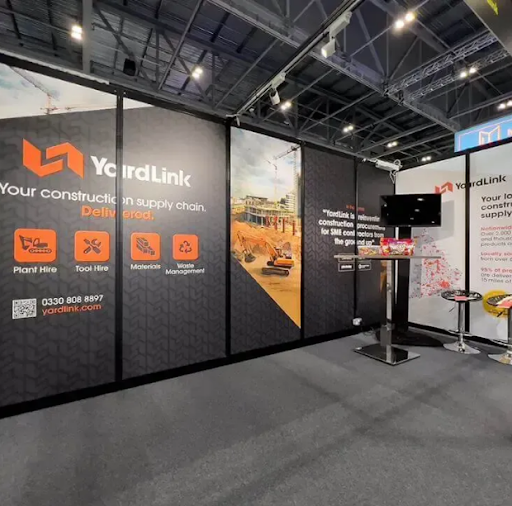
Retail moves in cycles. January clearance follows Christmas. Valentine’s Day follows January. Easter, summer, back-to-school, Black Friday, Christmas again. Each cycle demands new display materials, new graphics, new messages, and new in-store environments that reflect the campaign running at that moment. It is a relentless production schedule, and the material choices made at each stage directly affect both campaign impact and operating cost. Rigid printed display materials have become a practical solution for retailers working at that pace.
The Retail Display Problem That Foamex Board Solves
Short-term retail campaigns must balance presentation with practicality. Displays need to look professional and support brand consistency while remaining affordable and quick to produce at scale. Premium materials often compromise speed and cost, while lower-cost alternatives can reduce perceived quality and weaken brand impact.
Foamex board is located exactly where the strain is alleviated on both sides. It produces print quality that holds up at close retail viewing distances.Replacing it at the conclusion of each advertising cycle won’t put a burden on the display budget because it is reasonably priced. And it is available at the turnaround speeds that retail campaign schedules demand.
Why Visual Quality at Close Range Matters More in Retail Than Anywhere Else
Retail displays are viewed at close range, making print quality critical. Sharp graphics, accurate colours, and a smooth finish help displays maintain impact, while rigid construction prevents warping or distortion under retail conditions. For promotional displays, these qualities are essential to presenting products effectively and supporting commercial performance.
Campaign Speed: Where Foamex Board Delivers Under Pressure
Retail campaigns operate on tight schedules, leaving little room for production delays. Professional board printing offers fast turnaround, stocked standard sizes, and efficient finishing, making Foamex a practical choice for delivering large campaign rollouts on time.
Compare this to alternatives:
- Acrylic: Premium quality but longer lead times and higher cost per panel make it impractical for campaign-scale volumes
- Aluminium composite: Appropriate for permanent installs, not for six-week promotional campaigns
- Corrugated card: Quick and inexpensive, but print quality deteriorates at retail viewing distances
- Typical foamboard: Although inexpensive and lightweight, it warps in the typical temperature fluctuations found in retail settings.
Where Short-Term Retail Displays Deliver the Most Value
Not every retail environment places the same demands on campaign materials. Campaign teams that are most effective align display layouts with the kind of customer interaction they anticipate.
| Retail Application | What the Display Needs to Do | Why This Format Works |
| Point-of-sale promotions | Drive immediate purchase decisions | Strong close-range print quality and fast installation |
| Seasonal window campaigns | Capture attention from passing traffic | Clean visuals with reliable colour reproduction |
| Product launches | Introduce new ranges quickly across locations | Consistent output at campaign scale |
| Clearance and promotional events | Update messaging frequently | Fast replacement without excessive cost |
| Pop-up retail environments | Create temporary branded spaces | Lightweight and easy to transport |
| Multi-site retail campaigns | Maintain visual consistency | Repeatable production across locations |
The value is not simply producing displays quickly. It is being able to update environments repeatedly while maintaining the same standard of presentation from one campaign cycle to the next.
The Campaign Refresh Economics That Make This Material the Sensible Choice
High-volume retail campaigns require display materials that are cost-effective, consistent, and quick to produce. Standard rigid display panels provide reliable print quality at scale without making campaign refreshes impractical. When one campaign ends, new panels can be produced and installed efficiently for the next launch.
Getting the Specification Right From the Start
Not all display panels are produced to the same standard, and the difference between a correctly specified panel and an incorrectly specified one shows up in the retail environment under campaign conditions.
Thickness: 5 mm for larger freestanding displays that must maintain their rigidity without assistance; 3 mm for lighter applications and smaller format panels
Laminate finish: Gloss laminate improves color vibrancy for powerful promotional graphics, while matte laminate lessens glare under retail lighting
Edge finish: Clean-cut edges for panel displays that will be framed or mounted; shaped cuts for freestanding display formats
For screens viewed at less than one meter, the minimum print resolution is 1440 dpi; anything less appears at close retail distances.
Conclusion
Retail campaigns move quickly, but the materials behind them still influence how professional and effective they feel in-store. For short-term promotional activity, display solutions need to combine strong print quality, efficient installation, and reliable performance without creating unnecessary cost. Foamex Printing Company produces display materials for retail campaign applications to meet the specifications, volume, and turnaround campaign schedules demanded, helping brands deliver consistent, high-impact retail environments from launch through to completion.
Author Bio: Nimesh Kerai
Nimesh Kerai is the Printing Expert at Foamex Printing Company, London. He has been in the printing industry for quite a few years, which reflects in the skill with which he executes each project. He has played a significant role in the company’s reputation as one of the highest-quality foamex printers in the vicinity. He often shares his far-reaching industry knowledge with curious readers through engaging blogs.