Your waterfront property is one of your most valuable assets—and the shoreline holding it all together deserves more than a temporary fix. Erosion doesn’t pause for seasons. It chips away at your land quietly, steadily, until the damage becomes impossible to ignore. That’s why choosing the right expertise from the start makes all the difference between a shoreline that holds strong and one that keeps costing you.
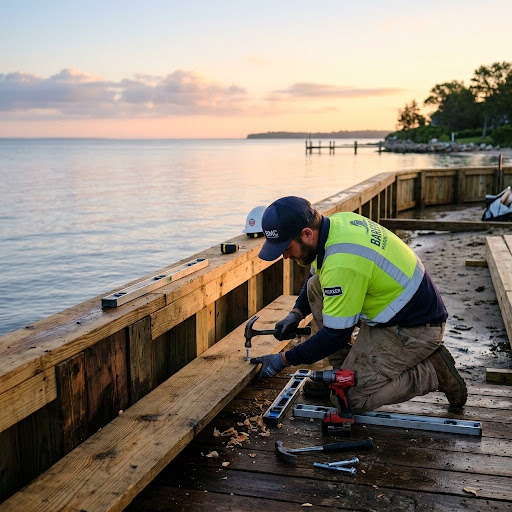
Barefoot Marine Construction brings the kind of hands-on, water-first experience that waterfront property owners can count on. From residential docks to commercial marine structures, every project starts with one non-negotiable goal: protecting what you’ve built.
What Does a Bulkhead Actually Do for Your Property?
A bulkhead is a retaining wall installed along a shoreline to hold back soil and prevent erosion caused by wave action, tidal movement, and water pressure. Without one, the land behind your waterfront gradually collapses into the water—taking landscaping, structures, and property value with it.
Think of it as the foundation of your entire waterfront. Everything built behind it—your lawn, your home, your dock—depends on that wall staying put. A properly constructed bulkhead doesn’t just stop erosion; it stabilizes your entire shoreline for decades.
The Most Common Bulkhead Materials and When to Use Them
Not all bulkheads are built the same, and the right material depends heavily on your specific waterfront conditions.
Vinyl Sheet Piling
Vinyl is one of the most popular choices today—and for good reason. It resists corrosion, doesn’t rot, and holds up against saltwater environments far better than older materials. It’s also low-maintenance, making it an excellent long-term investment for residential waterfront properties.
Steel Sheet Piling
For heavy-duty applications or areas with significant wave energy, steel offers superior strength. It’s commonly used in commercial settings or where the structural load demands more muscle. Proper coating and treatment keep rust at bay in marine environments.
Concrete Bulkheads
Concrete provides exceptional durability and is often the go-to choice for high-traffic marine areas. While it comes at a higher initial cost, its lifespan and structural integrity make it a solid return on investment over time.
Timber
Traditional timber bulkheads still serve a purpose in certain environments, particularly freshwater settings. However, they require more frequent maintenance and tend to have a shorter lifespan compared to vinyl or steel in saltwater conditions.
Signs Your Existing Bulkhead Needs Attention
Catching problems early saves money—and shoreline. Here are a few warning signs that shouldn’t be ignored:
- Bowing or leaning walls: A bulkhead that’s pushing outward is under stress and could fail.
- Visible cracks or gaps: These allow water infiltration and accelerate deterioration.
- Soil loss behind the wall: If you’re noticing sinkholes or settlement near the bulkhead, erosion is already happening behind the structure.
- Rust staining or rotting sections: Surface-level damage often signals deeper structural concerns.
- Water seeping through the wall: This pressure buildup can compromise the entire structure over time.
Acting on these signs quickly keeps a manageable repair from becoming a full replacement.
Why Proper Installation Is Everything
A bulkhead is only as good as the team that installs it. Poor workmanship—improper tie-back anchoring, inadequate deadman placement, or skipping drainage provisions—leads to premature failure, regardless of how quality the materials are.
Proper installation involves a full site assessment of soil conditions, tidal patterns, and water depth before a single sheet of piling goes in the ground. Drainage must be accounted for to prevent hydrostatic pressure from building up behind the wall. Tie-backs need to be anchored at the correct depth and spacing to distribute load evenly.
These aren’t optional details. They’re the difference between a bulkhead that lasts 30 years and one that starts leaning after the first major storm.
How Barefoot Marine Construction Approaches Each Project
Barefoot Marine Construction treats every waterfront differently—because every waterfront is different. Before any work begins, the team evaluates site-specific conditions: the type of water body, tidal activity, soil composition, and the long-term goals of the property owner.
From there, the right materials are selected, and the installation is carried out with precision. Every project is built to handle the specific stresses of that shoreline—not a one-size-fits-all template pulled from a catalog.
That site-specific approach is what produces results that hold up year after year, through storms, tidal shifts, and the slow grind of daily wave action.
What Sets Barefoot Marine Construction Apart
Barefoot Marine Construction brings deep regional knowledge of Florida’s waterways, coastal conditions, and permitting requirements. Marine construction requires more than technical skill—it requires understanding how local waters behave and how regulations shape what’s possible.
Working with a team that knows your specific waterway means fewer surprises, smoother permitting, and a finished structure that’s built for the conditions it will actually face. That local expertise is something no out-of-state contractor can replicate.
Protecting Your Shoreline Starts Here
A trusted bulkhead contractor delivers far more than a retaining wall—they give you lasting peace of mind, long-term shoreline stability, and the confidence that your waterfront investment is protected against the relentless forces of erosion, tidal pressure, and storm surge for decades to come.
If your waterfront is showing signs of erosion, or if you’re building a new structure and want it done right the first time, Barefoot Marine Construction is ready to help. Reach out today to schedule an assessment and take the first step toward a shoreline that holds strong—season after season.