
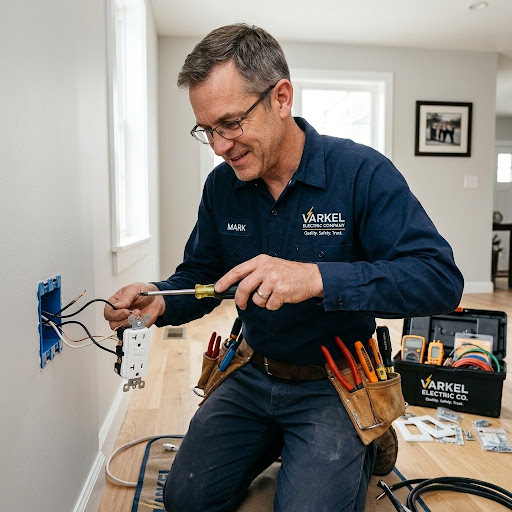
Most homeowners don’t think about their outlets until something goes wrong. A flicker here, a trip there—and suddenly, what seemed like a minor inconvenience turns into a safety concern. GFCI outlets, however, are designed to stop problems before they escalate, and having them professionally installed is one of the best decisions you can make for your home.
At Varkel Electric Company, GFCI outlet installation is one of our most requested services—and for good reason.
What Makes GFCI Outlets Different From Regular Outlets?
GFCI stands for Ground Fault Circuit Interrupter. Unlike a standard outlet, a GFCI outlet constantly monitors the flow of electricity through a circuit. The moment it detects an imbalance—even one as small as 5 milliamps—it cuts the power within milliseconds.
That speed matters. Electrical shocks can cause serious harm in less than a second. A GFCI outlet responds faster than a human can blink, making it a critical line of defense in areas where water and electricity are in proximity.
According to the Electrical Safety Foundation International (ESFI), GFCI protection has helped reduce home electrocution deaths by more than 83% since its introduction in the 1970s. That’s not a minor improvement—that’s a transformation in residential electrical safety.
Where Does Your Home Actually Need GFCI Outlets?
The National Electrical Code (NEC) requires GFCI protection in specific areas of a home where moisture is a risk factor. These include:
- Bathrooms – Every bathroom receptacle must be GFCI-protected.
- Kitchens – Outlets within six feet of a sink require GFCI coverage.
- Garages and Unfinished Basements – These spaces frequently have damp conditions.
- Outdoor Receptacles – All exterior outlets must be GFCI-protected.
- Crawl Spaces and Utility Rooms – Often overlooked, but equally important.
If your home was built before 1980, there’s a strong chance it doesn’t meet current NEC standards. Even newer homes can fall short if renovations were done without proper permits or inspections. A professional assessment from Varkel Electric Company will quickly identify any gaps in your home’s protection.
The Real Risks of Skipping Professional Installation
DIY electrical work is tempting, especially when online tutorials make it look straightforward. But GFCI outlet installation involves more than swapping out a receptacle. Improper wiring can result in:
- False tripping – The outlet cuts power when it shouldn’t, causing constant frustration.
- No protection at all – A miswired GFCI outlet may appear to work but offer zero safety benefit.
- Code violations – Unpermitted electrical work can complicate home sales and insurance claims.
- Fire hazards – Loose connections or reversed wiring are among the leading causes of residential electrical fires.
The stakes are simply too high to leave to chance. Professional installation ensures that every outlet is wired correctly, tested thoroughly, and compliant with local building codes.
What Sets Varkel Electric Company Apart
Varkel Electric Company brings precision, professionalism, and genuine care to every job. Our licensed electricians don’t just install outlets—they evaluate your entire electrical setup to make sure your home is as safe as it can be.
Every service call includes a thorough inspection of the installation area, proper load testing of the new GFCI outlet, and a final walkthrough so you understand exactly what was done and why. There are no shortcuts, no guesswork, and no hidden fees.
Clients consistently highlight how smooth and stress-free the experience is. From the initial call to the final test, Varkel Electric Company makes the process efficient and transparent.
How GFCI Outlets Add Long-Term Value to Your Property
Safety upgrades aren’t just about protection—they’re also an investment. Homes with up-to-code electrical systems are more attractive to buyers, easier to insure, and less likely to face costly repairs down the line.
GFCI Outlet Installation performed by a licensed electrician protects your family from dangerous electrical faults while also keeping your home compliant with modern safety standards, giving you both peace of mind and long-term property value you can count on. Buyers and home inspectors look specifically for GFCI compliance during the sale process, and missing outlets in required areas can delay or derail a sale entirely.
Investing in professional installation today can save thousands in remediation costs later.
The Varkel Electric Company Promise
Electrical safety is not something to postpone. Whether you’re moving into a new home, renovating an existing one, or simply want to ensure your family is protected, Varkel Electric Company is ready to help.
Our team is licensed, insured, and experienced in residential and commercial electrical services throughout the area. We take pride in delivering work that meets the highest standards—because your safety depends on it.
Ready to upgrade your home’s electrical safety? Contact Varkel Electric Company today and schedule your GFCI outlet installation service.
Frequently Asked Questions
How long does GFCI outlet installation take?
A single outlet typically takes 30 to 60 minutes to install professionally. If multiple outlets across different rooms are being upgraded, a full appointment may take two to four hours, depending on the scope.
How do I know if my GFCI outlet is working correctly?
Every GFCI outlet has a “Test” and “Reset” button. Press the Test button—the outlet should lose power. Press Reset to restore it. If the outlet doesn’t respond correctly, it may be faulty or improperly wired and should be inspected by a licensed electrician.
Can one GFCI outlet protect multiple outlets on the same circuit?
Yes. A GFCI outlet wired to the “load” terminals can protect all downstream outlets on the same circuit. A professional electrician will determine the best wiring configuration for your home.
Is GFCI installation required by law?
The NEC mandates GFCI protection in specific locations. Local codes may have additional requirements. Homes undergoing renovation or sale are typically required to bring electrical systems up to current code standards.