
Most homeowners don’t think about their air conditioner until it stops working—usually on the hottest day of the year. By then, the damage is done, the repair bill is steep, and the discomfort is very real. The truth is, your AC system is working hard every single day, and without proper care, it won’t last nearly as long as it should.
At Arms AC and Heating, we’ve seen it all. From clogged filters that turned into compressor failures, to minor refrigerant leaks that quietly drove up energy bills for months before anyone noticed. The pattern is almost always the same: a small, preventable issue gets ignored until it becomes a costly emergency.
This post breaks down what’s really at stake when AC maintenance gets pushed to the back burner—and why staying ahead of it makes all the difference for your home, your wallet, and your comfort.
What Happens to Your AC System Without Regular Care?
Your air conditioner is a mechanical system. Like a car or any other piece of equipment, it has components that wear down, get dirty, and lose efficiency over time. Without routine attention, that decline happens faster than most people expect.
Dust and debris build up inside the unit. Filters get clogged. Coils collect grime. Drainage lines develop blockages. Each of these issues might seem minor in isolation, but together, they force your system to work significantly harder to push the same amount of cool air through your home.
The result? Higher energy bills, shorter equipment lifespan, and a system that’s far more likely to break down unexpectedly. A study by the U.S. Department of Energy found that a dirty or poorly maintained HVAC system can lose up to 5% of its efficiency for every year it goes without proper servicing. That adds up quickly.
The Real Financial Impact of Neglected Maintenance
Here’s where things get concrete. An emergency AC repair—replacing a compressor, fixing a refrigerant leak, or dealing with electrical failure—can cost anywhere from $500 to $2,500 or more, depending on the severity. A full system replacement often runs between $3,000 and $7,000.
Routine maintenance, by comparison, is a fraction of that cost. And beyond avoiding repair bills, a well-maintained system runs more efficiently, which directly reduces monthly energy costs. For homeowners in warmer climates where the AC runs for eight or more months a year, those savings are substantial.
There’s also the matter of your system’s lifespan. A properly maintained air conditioner can last 15 to 20 years. One that’s consistently neglected may need replacement in 10 years or less. That’s a significant difference in long-term value.
Why Professional AC Maintenance Outperforms DIY Fixes
Changing your air filter regularly is a great habit—and it genuinely helps. But it’s only one piece of a much larger picture. A professional AC maintenance visit covers things that simply aren’t visible or accessible to the average homeowner.
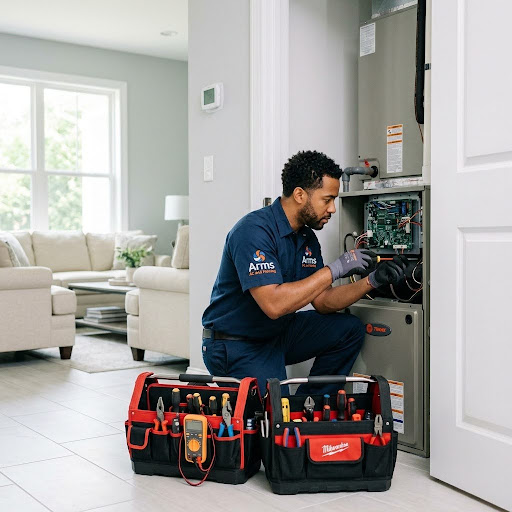
Technicians check refrigerant levels and look for leaks. They inspect electrical connections, test capacitors and contactors, clean evaporator and condenser coils, flush drain lines, and measure airflow. These aren’t optional extras—they’re the core of what keeps a system running cleanly and efficiently.
Arms AC and Heating technicians are trained to catch the early warning signs that most homeowners miss entirely. A slightly worn belt, a minor refrigerant drop, or a drainage line that’s starting to slow—these are the kinds of details that, when caught early, prevent the failures that leave families sweating through a summer weekend waiting for emergency service.
The Best Times to Schedule AC Maintenance
Timing matters. The best window for AC maintenance is spring—before the heat arrives and before every HVAC company in town is booked out for weeks. Getting your system serviced in March, April, or early May means your equipment is tested, tuned, and ready before you actually need to rely on it.
That said, fall maintenance is equally valuable, particularly for homes with combined heating and cooling systems. A seasonal check before winter ensures your heating components are in good shape and that your system transitions smoothly between modes.
If it’s been more than a year since your last service visit—or if you’ve never had your system professionally inspected—there’s no bad time to start.
Signs Your AC System Is Already Telling You Something Is Wrong
Sometimes the system itself gives clear signals that maintenance is overdue. Watch for:
- Unusual noises — rattling, banging, or grinding sounds that weren’t there before
- Weak airflow — rooms that take longer to cool than they used to
- Warm air from vents — a common sign of refrigerant issues or compressor problems
- Frequent cycling — the unit turning on and off more often than normal
- Rising energy bills — with no obvious change in usage habits
- Excess humidity indoors — a sign the system isn’t dehumidifying properly
- Water pooling near the unit — often caused by a blocked condensate drain
Any of these symptoms deserves prompt attention. In many cases, catching them early keeps a minor service call from turning into a major repair.
Why Arms AC and Heating Is the Right Call
AC Maintenance done right with thorough inspections, expert attention to detail, and service that keeps your system performing efficiently all year long—is exactly what Arms AC and Heating delivers to every customer, every time.
Arms AC and Heating brings years of hands-on experience servicing residential and commercial systems across the region. Every maintenance visit is treated as an opportunity to protect your investment and give you confidence that your system is ready for whatever the season brings.
The team is punctual, professional, and genuinely committed to doing the job right the first time. No shortcuts. No upselling on parts you don’t need. Just honest, thorough service from technicians who take pride in their work.
Whether you’re setting up routine annual maintenance or need a system that’s been running rough for a while to be looked over, Arms AC and Heating is ready to help. Your comfort—and your AC system—are in good hands.