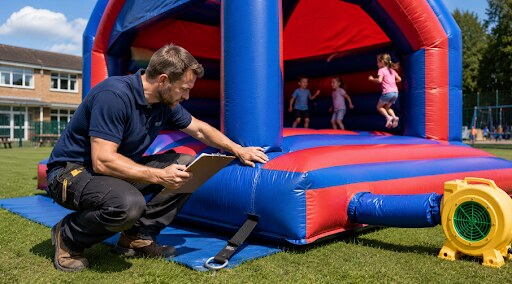
Commercial inflatables are built to withstand far more demanding use than residential inflatable products. Whether used by rental companies, schools, leisure centres or event organisers, they are expected to perform safely and reliably through repeated inflation, transportation and regular public use.
One of the most common questions buyers ask before making a purchase is: How long do commercial inflatables actually last?
The answer depends on much more than the quality of the material alone. Daily maintenance, storage conditions, frequency of use and operating practices all play an important role in determining how many years an inflatable can remain in good working condition.
Understanding these factors can help buyers make more informed purchasing decisions and maximize the return on their investment.
What Determines the Lifespan of a Commercial Inflatable?
No two commercial inflatables experience exactly the same working conditions. A bouncy castle used occasionally at community events will naturally age differently from one hired out every weekend throughout the summer.
Several key factors have the greatest influence on lifespan.
Material Quality
Commercial inflatables are typically manufactured from heavy-duty PVC specifically designed for repeated commercial use. Stronger fabrics provide better resistance to abrasion, stretching and UV exposure than lightweight residential materials.
While higher-quality materials generally improve durability, they are only one part of the overall picture.
Manufacturing Standards
Construction quality is equally important.
Reinforced stitching, properly designed stress points and consistent manufacturing processes help an inflatable withstand the repeated inflation, deflation and movement that occur during regular operation.
Poor construction can lead to premature wear even when premium materials are used.
Frequency of Use
Usage has one of the biggest impacts on lifespan.
For example:
- An inflatable used for ten family events each year may remain in excellent condition for many years.
- A commercial rental unit operating every weekend experiences significantly more wear over the same period.
Higher usage does not necessarily mean a shorter lifespan if the equipment is properly maintained, but it does increase the importance of regular inspections and repairs.
Typical Lifespan Expectations
Although every product is different, the following estimates provide a realistic expectation under normal operating conditions.
| Usage Type | Typical Lifespan |
| Occasional private use | 8–12 years |
| Commercial rental business | 3–7 years |
| Heavy seasonal commercial use | 2–5 years |
These figures are intended as general guidance rather than guaranteed service lives. Proper care can extend the lifespan considerably, while poor maintenance may shorten it.
The Most Common Causes of Wear
Commercial inflatables rarely become unusable because of a single major problem. Instead, gradual wear accumulates over time.
UV Exposure
Continuous exposure to sunlight slowly affects PVC materials, particularly during long outdoor seasons.
Whenever possible, equipment should be stored indoors when not in use to reduce unnecessary UV exposure.
Incorrect Storage
Packing away an inflatable while it is still wet is one of the most common causes of long-term damage.
Moisture trapped inside the folded material may encourage mould, unpleasant odours and fabric deterioration.
Allowing the inflatable to dry completely before storage helps protect both the fabric and stitching.
Surface Abrasion
Dragging an inflatable across concrete, gravel or rough ground gradually wears away the protective outer surface.
Using suitable ground sheets and lifting rather than dragging the inflatable can significantly reduce abrasion.
Small Damage Left Unrepaired
Minor tears or loose stitching are normal after extended commercial use.
Addressing these issues early often prevents larger repairs later.
Daily Maintenance Makes the Biggest Difference
Many buyers focus entirely on material thickness when comparing products. In reality, maintenance habits often have a greater influence on lifespan than small differences in fabric specifications.
Simple daily routines can dramatically extend the working life of commercial inflatables.
These include:
- Cleaning dirt and debris after each use.
- Allowing the inflatable to dry completely before packing.
- Inspecting seams, anchor points and high-wear areas regularly.
- Storing equipment in a clean, dry environment.
- Checking blowers and accessories before every operation.
These tasks require relatively little time but can help prevent more expensive repairs in the future.
When Should a Commercial Inflatable Be Repaired or Replaced?
Not every sign of wear means an inflatable has reached the end of its service life.
Professional repairs can often restore damaged panels, seams or anchor points safely and economically.
Replacement usually becomes the better option when:
- Large sections of material show significant wear.
- Repairs become increasingly frequent.
- Safety can no longer be maintained to commercial standards.
- Ongoing repair costs begin to outweigh replacement value.
Regular inspections help operators make these decisions before small problems become major safety concerns.
Choosing Equipment Built for Long-Term Use
While maintenance plays a vital role, selecting well-designed equipment from the beginning remains one of the best long-term investments.
Experienced manufacturers such as East Inflatables provide detailed product specifications, manufacturing information and technical support that help commercial buyers evaluate durability before purchasing.
Buyers should also consider factors such as intended usage, operating environment and expected annual workload rather than comparing products based solely on price.
For businesses planning to purchase commercial bouncy castles, understanding how construction quality and maintenance work together is often more valuable than focusing on initial purchase cost alone.
Final Thoughts
The lifespan of a commercial inflatable is influenced by many factors, including construction quality, frequency of use, maintenance routines and storage conditions. While no inflatable lasts forever, proper care can significantly extend its working life and improve long-term value.
Before making a purchase, buyers should evaluate not only the product itself but also how it will be used and maintained over time. Investing in quality equipment and following good maintenance practices can reduce repair costs, improve reliability and deliver better performance throughout its service life.
For businesses comparing different commercial inflatable equipment, taking a long-term view rather than focusing solely on the purchase price often leads to a better investment and more dependable equipment for years to come.