
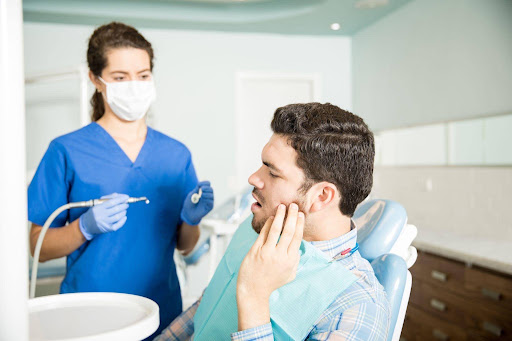
A cracked molar at midnight. A filling that falls out on a Friday. An abscess that flares up just before a bank holiday. Dental emergencies rarely arrive at a convenient moment, which is why so many people across the UK are grateful when they finally get seen.
Yet here is the part most patients overlook: emergency dental treatment is usually the beginning of your recovery, not the end. The urgent appointment deals with the crisis.
The follow-up appointment deals with the cause. Patients often skip that second visit once the immediate pain has eased, but delaying treatment can allow the underlying problem to get worse and become more costly to fix.
If you have recently been treated by an emergency dentist, this article explains why booking that next appointment is one of the smartest things you can do for your mouth, your wallet and your peace of mind.
Emergency Care Is Often Temporary by Design
Urgent dental care in the UK, whether accessed through NHS 111, an urgent dental care centre or a private practice, has one job: stabilise the problem.
Dentists working in these settings focus on relieving pain, controlling infection or bleeding, and protecting the tooth until proper treatment can be carried out. NHS guidance itself makes clear that urgent services should address the immediate issue and then support patients towards further care.
That means the dressing placed over your broken tooth, the temporary filling, or the course of antibiotics for an abscess is a holding measure.
A temporary filling can wash out within weeks. Antibiotics calm an infection but rarely cure the underlying problem, because the source, often a dying nerve, is still there.
Without a definitive procedure such as a root canal, a permanent restoration or an extraction, the issue tends to return, frequently worse than before. Dentists who provide urgent dental care will tell you that the patients they see twice are usually the ones who never came back the first time.
Small Problems Become Expensive Ones
There is a financial argument here, too. In England, an urgent NHS appointment is charged at the same rate as Band 1 (£27.90 from April 2026), but that fee only covers the care needed to stop pain or prevent your condition from worsening. Definitive work, such as permanent teeth fillings and root canals, falls under Band 2, while crowns fall under Band 3, both of which cost considerably more.
Delay that follow-up, and you risk the tooth deteriorating to the point where a simple filling becomes a root canal, or a root canal becomes an extraction followed by a bridge or implant. Each step up that ladder costs more, takes longer and involves more discomfort.
Healthwatch England has reported that people who cannot access follow-up care often end up cycling back through urgent services repeatedly, in pain each time. Booking the review appointment breaks that cycle early.
Healing Needs to Be Checked, Not Assumed
Follow-up visits are not only about completing treatment. They allow your dentist to:
- Confirm an infection has fully cleared. A dental abscess that is only partially resolved can spread, and in rare cases, lead to serious complications such as facial swelling or sepsis.
- Check that the extraction site is healing properly. Conditions like dry socket typically appear a few days after the procedure, exactly when a review would catch them.
- Assess a traumatised tooth over time. After a knock or fall, a tooth can look fine yet quietly lose its nerve supply over the following weeks. Only monitoring, sometimes with X-rays, reveals this.
- Spot what caused the emergency in the first place. Grinding, gum disease and untreated decay are common culprits, and addressing them prevents a repeat performance.
What to Do After Your Urgent Appointment
Before you leave the chair, ask three questions: what was done today, what still needs to be done, and when should I be seen again? Write down the answers, book the follow-up before life gets in the way, and contact the practice promptly if pain, swelling, or bleeding returns in the meantime.
If you are not registered with a regular dentist, your urgent care provider or NHS 111 can advise on local options for ongoing treatment.
Emergency Care Starts the Job, Follow-Up Finishes It
Think of emergency dental treatment as first aid for your mouth. It is essential, it works, and it gets you out of pain, but it is rarely the whole story.
The follow-up appointment is where temporary fixes become permanent ones, where healing is verified and where the next emergency is prevented. Your future self, and your future dental bills, will thank you for keeping it.