Tree removal is one of the most significant decisions a property owner can make about a garden or site. Mature trees bring shade, privacy and character, so felling should never be treated as the automatic answer to every problem. At the same time, there are situations where retaining a tree creates unnecessary risk because of structural failure, severe disease, major damage or unavoidable conflict with the surrounding property. The key is to assess the tree, the site and the alternatives before work begins.
Start With a Proper Assessment
A tree that looks unhealthy is not necessarily unsafe, and a tree that looks green and full can still have hidden structural problems. Cavities, fungal bodies, cracks at major unions, root damage, deadwood and sudden changes in lean can all justify professional inspection. An arborist should consider the whole structure, not just the most visible defect, and explain whether pruning, monitoring or other management could reduce the risk without removing the tree.
Where professional tree felling is recommended, the reason should be clear and proportionate. The decision may relate to advanced decay, dangerous instability, significant storm damage or a tree that cannot reasonably be managed around buildings, roads or neighbouring land. The property owner should understand why removal is preferred over pruning and what the expected condition of the site will be once the work is complete.
Check Whether the Tree Is Protected
Before major work starts, it is important to establish whether planning restrictions apply. Trees covered by a Tree Preservation Order or located in a conservation area can require consent or notification before removal or significant pruning. The fact that a tree stands on private land does not automatically mean the owner can remove it without considering local controls.
An experienced contractor can help identify whether restrictions may apply and what information the local authority needs. This step should happen early, because planning requirements can affect scheduling and the type of work that is permitted. It is far better to resolve the legal position before equipment and labour are booked.
Plan the Felling Method Around the Site
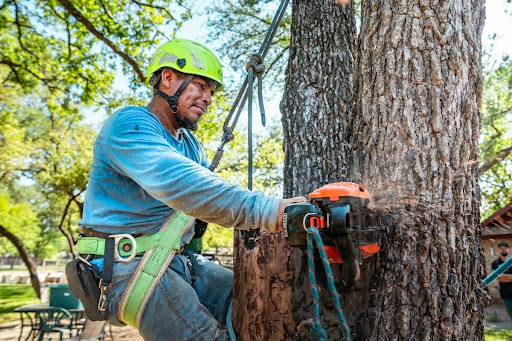
In open land, a tree may sometimes be felled from the base into a clear drop zone. London gardens are often very different. Buildings, fences, sheds, roads, parked vehicles and neighbouring properties can make straight felling impossible. In those locations, the tree may need to be dismantled in sections by a climber or from a platform, with branches and timber lowered under control.
Rigging becomes especially important when there is no safe area for material to fall freely. Ropes, lowering devices and carefully planned cutting sequences allow the team to control sections of the crown and trunk. The method may take longer, but it reduces the chance of impact damage to structures or landscaping.
Think About Access Before Work Day
Restricted access can change the equipment required and the cost of the job. A rear garden reached through a narrow side passage may not allow large machinery or a chipper close to the tree. Timber might need to be cut into smaller sections and moved by hand, while branches may need to be processed away from the immediate work area.
Property owners can help by clearing movable items, arranging access with neighbours where necessary and confirming parking or gate restrictions in advance. A good contractor should inspect the access route before quoting so that the planned method reflects real site conditions rather than assumptions.
Decide What Will Happen to the Stump
Felling removes the tree above ground, but the stump remains unless separate work is planned. Some owners are happy to leave a low stump in a planted area, while others want the ground cleared for paving, replanting or construction. Stump grinding is commonly used to reduce the stump below ground level and can make the space easier to reuse.
The quotation should make clear whether stump work is included, because felling and grinding are usually separate operations. Access, stump diameter and nearby walls or underground services can all influence what is practical. Discussing this before the tree comes down avoids a surprise when the main work is finished.
Ask How Waste Will Be Handled
Large trees produce a substantial volume of branches, timber and woodchip. Property owners should know whether the contractor will remove everything, leave logs for firewood or retain chip for garden use. Urban sites often have limited storage, so efficient waste handling can be as important as the felling itself.
Clear arrangements also help keep the site safe. Timber should not be left blocking paths or shared access unless that has been agreed. A professional team will usually plan processing and removal as part of the overall method rather than treating it as an afterthought.
Use Removal as Part of a Wider Garden Plan
The loss of a mature tree changes light, privacy and the appearance of a garden. Owners may want to consider replacement planting, particularly where the original tree provided screening or ecological value. A smaller species in a better location may deliver many of the same benefits without creating the same future conflict.
It can also be useful to inspect nearby trees at the same time. If one tree has failed because of disease, storm exposure or site conditions, others may deserve attention. Combining assessment with a broader management plan can reduce the need for repeated emergency visits.
Choose a Contractor That Can Explain the Decision
Tree felling involves working at height, chainsaws, heavy timber and potentially complex rigging. Insurance, training and a clear work method therefore matter. The contractor should be able to explain how the tree will be dismantled, how people and property will be protected, and what happens if conditions on site differ from what was expected.
For property owners arranging tree removal London work, the second-last question should be whether removal is genuinely the most sensible option and whether the method suits the site. A competent arboricultural contractor should be willing to explain alternatives, planning constraints, access issues and the expected finish rather than simply quoting for the fastest possible removal.
The best tree-felling projects are carefully planned from assessment through to clean-up. When the decision is justified, permissions are checked and the dismantling method matches the surroundings, even a large urban tree can be removed in a controlled and predictable way. That protects the property while giving the owner a clear basis for whatever comes next, whether that is replanting, landscaping or simply creating a safer garden.