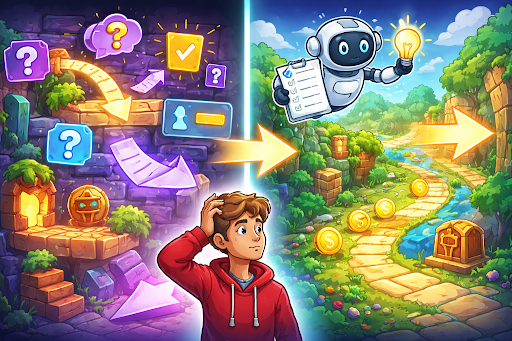
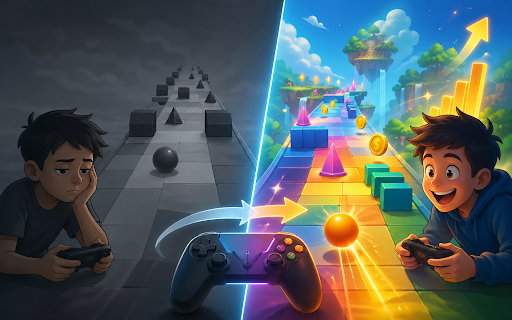
A lot of creators face the same problem where their AI generated game looks fine but still feels boring after a few seconds of playing. This usually leads to confusion because visually everything seems correct but players still leave quickly. The main issue is that visual quality alone does not create engagement. Players care more about how an AI-built game feels when they interact with it rather than how it looks on screen. If the gameplay does not give them a reason to stay or improve they lose interest very fast. Many social gaming platforms can generate structure quickly but the real challenge is turning that structure into something that feels fun and alive instead of repetitive or empty.
Why Your Game Feels Boring
Most games feel boring because the core gameplay loop is too weak or too repetitive without any meaningful variation. If the player is doing the same action without feeling progress or challenge the experience becomes predictable very quickly. Another reason is lack of feedback because when actions do not create visible or satisfying results the game feels flat. Sometimes the issue is also pacing where everything happens too slowly or too fast which breaks immersion. When these elements are not balanced the game fails to create emotional engagement and players stop playing even if the concept is interesting.
The Problem with Weak Gameplay Loops
The gameplay loop is the main cycle of actions the player repeats in a game. If this loop is not engaging the entire experience falls apart. Many AI generated games fail here because they focus on generating structure but not on refining interaction quality. A weak loop usually means the player is not learning anything new or not being rewarded properly for their actions. Without variation or progression the brain quickly identifies repetition and loses interest. A strong loop on the other hand always gives the player something to react to or improve which keeps attention active.
Fixing the Core Experience
- Make sure every action gives instant and clear feedback
- Add small variations in gameplay to avoid repetition
- Balance difficulty so it feels neither too easy nor too hard
- Ensure the player always understands what to do next
These improvements help turn a flat experience into something more engaging because they directly affect how the game feels in real time. When the core experience is smooth and responsive players naturally stay longer and explore more.
Why Feedback Is More Important Than Graphics
One of the biggest mistakes beginners make is focusing too much on visuals while ignoring feedback systems. Feedback is what tells the player that their actions matter. This can be visual effects, sound reactions, score updates or any response that confirms interaction. Without feedback the game feels empty even if it looks polished. Strong feedback creates satisfaction and helps players feel connected to what they are doing. This emotional response is what turns simple mechanics into enjoyable gameplay experiences.
Improving Engagement Through Progression
Engagement increases when players feel they are progressing over time. If nothing changes during gameplay the experience becomes predictable and boring. Adding progression can be as simple as increasing difficulty introducing small challenges or rewarding performance. The key is to make sure players feel improvement or change as they continue playing. Even small progression systems can significantly improve how long someone stays in the game because they create a sense of purpose.
Why Simplicity Can Still Feel Fun
Simple games are not boring by default but poorly designed simple games are. A simple idea can still feel engaging if it is polished properly and has strong feedback and progression. The issue is not simplicity but lack of refinement. Many successful games use only one or two mechanics but they make sure those mechanics feel smooth responsive and rewarding. When a simple idea is executed well it becomes easier for players to understand and enjoy without confusion which increases engagement naturally.
Learning from a Simple Game Example
A game like Cake chess shows how a basic mechanic can stay engaging when designed properly. The player avoids obstacles while the speed increases gradually which creates natural tension and challenge. Even though the concept is simple the increasing difficulty and smooth controls keep the experience interesting. This proves that boring games are not caused by simplicity but by lack of variation and weak execution. When core mechanics are refined properly even minimal designs can feel exciting and replayable.
Common Reasons Games Lose Interest Quickly
- No meaningful progression during gameplay
- Repetitive actions without variation
- Lack of feedback for player actions
- Poor balance in difficulty or pacing
These issues directly affect how players feel while interacting with the game and fixing them can dramatically improve engagement even without adding new features.
How to Make Your Game Feel Alive
To make your game feel more alive you need to focus on interaction quality rather than feature quantity. This means improving how responsive the game feels and ensuring every action has a clear reaction. Adding small visual or audio responses can make a big difference in how satisfying gameplay feels. You should also ensure that the player always has something to look forward to whether it is a new challenge score improvement or visual change. When the game feels responsive and reactive players naturally stay more engaged.
Testing What Feels Fun and What Does Not
Testing is essential because it helps you identify what parts of your game feel boring or engaging. You should play your game multiple times and pay attention to moments where interest drops. Feedback from other players is even more useful because they experience the game without bias. Each test should help you identify weak areas and improve them step by step. Over time this process helps you refine your game into something more enjoyable and balanced.
Wrapping Up
A boring AI generated game is usually not the result of bad ideas but the result of weak gameplay design and lack of feedback. Players stop engaging when the experience feels repetitive unclear or unresponsive. By improving core mechanics adding meaningful feedback and creating progression you can completely change how your game feels. The goal is not to make the game more complex but to make it more responsive and enjoyable. When players feel connected to what they are doing they stay longer and enjoy the experience more. Continuous testing and refinement are what turn a boring game into an engaging one that players actually want to return to.