
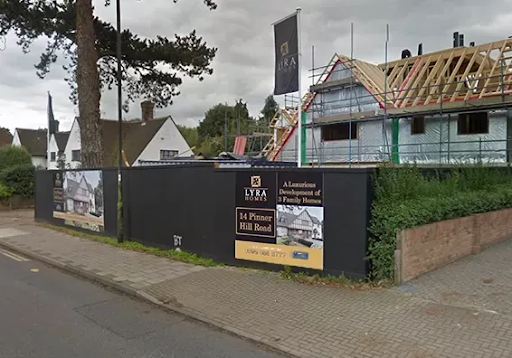
Urban regeneration in the UK is no longer just a construction story. It is a community story, a brand story, and increasingly a political one. When a council or developer moves into an area for a five-year regeneration programme, the panels that surround the site are not simply a safety requirement, they are the face of the project for the entire duration of the work. What that face communicates to the community living around it shapes how the development is perceived, discussed, and ultimately received when it opens. Getting it right matters more than most project managers initially appreciate.
From Barrier to Brand Asset, The Shift That Is Happening
There was a time when panels were universally treated as a contractual necessity. Something had to go around the site perimeter. It had to meet safety specifications. Beyond that, the standard approach was plain blue or green panels, perhaps a project logo, and a planning notice. Nobody expected anything more.
That standard is changing, driven by three converging pressures.
Community relations requirements are increasingly written into planning permissions for major regeneration projects. Local authorities in London and other major cities are requiring developers to demonstrate engagement with the surrounding community, and the hoarding panels are the most visible daily touchpoint that engagement has.
Investor and stakeholder communication has become a function of the hoarding in a way it was not previously. Off-plan sales, funding announcements, and political approvals are now sometimes tied to the public perception of a project, and the hoarding is part of the evidence base for that perception.
Brand competition between developments has intensified in urban areas where multiple regeneration projects are competing for the same buyers, tenants, and public goodwill. A hoarding that communicates vision and quality gives a development an advantage in the competition before a single apartment is complete.
What Regeneration Site Hoarding Is Used to Communicate
- Community narrative: Share the history, identity, and character of the local area to create a stronger connection and help residents feel included in the change taking place.
- Development vision: Use architectural visuals, design concepts, and future public space plans to show what the completed project will deliver and maintain interest throughout construction.
- Progress updates: Refresh panels at key milestones to communicate progress, reinforce transparency, and demonstrate ongoing momentum to the local community.
The Practical Specification Questions That Determine Outcome
Choosing hoarding panels for a regeneration site involves decisions that have a direct impact on how long the installation performs and how much the project spends over the full site duration.
- Site duration: Match materials and finishes to the expected project lifespan.
- Panel replacement: Allow for efficient content updates without rebuilding structures.
- Viewing conditions: Design graphics for multiple distances and viewing angles.
- Wind loading: Specify panels and fixings to withstand site exposure and wind pressure.
What High-Performing Regeneration Sites Plan Before Installation
Projects that get stronger long-term results usually make specification decisions before installation begins rather than reacting after problems appear.
| Decision Area | Standard Approach | Better Long-Term Approach |
| Content planning | One design for entire project duration | Scheduled content updates at project milestones |
| Community communication | Generic branding and planning notices | Local messaging and project storytelling |
| Material selection | Standard specification across all sites | Materials matched to duration and exposure |
| Viewing experience | Designed for close-range viewing only | Designed for pedestrians, drivers, and surrounding buildings |
| Maintenance planning | Replace only after visible deterioration | Planned inspection and refresh schedule |
| Budget allocation | Lowest upfront production cost | Total cost across full project lifecycle |
| Stakeholder engagement | Communication begins after complaints | Communication integrated from project launch |
The difference is rarely the overall spend. It is whether decisions are made for installation day or for the full life of the regeneration programme.
The Cost of Getting It Wrong on a Long-Duration Site
On a regeneration project running three to five years, a hoarding panel installation that was under-specified or poorly briefed creates compounding problems. Fading graphics within the first twelve months require replacement that was not budgeted. Panels that warp or lift create safety and aesthetic issues mid-project. Artwork that was not designed for the viewing distances of the specific site reads poorly and generates community complaints rather than positive engagement.
Conclusion
These are not theoretical risks. They are the outcomes that project managers on large-scale urban regeneration sites encounter when panels are treated as a procurement afterthought rather than a planned communication investment. Hoarding Print Company works with developers and project managers on regeneration sites across London, producing hoarding that are correctly specified for site duration, viewing distance, and community communication requirements from the first day of installation to the last.
Author Bio: Nimesh Kerai
Nimesh Kerai, the Printing Head at Hoarding Printing Company London, has a proven track record of delivering large format prints of unparalleled quality to customers. He is a technical expert as well as deeply understands the market and trends. His contribution to the company’s growth is undeniable. He often loves to share his extensive industry knowledge and market insights with a larger audience through interesting blog posts.