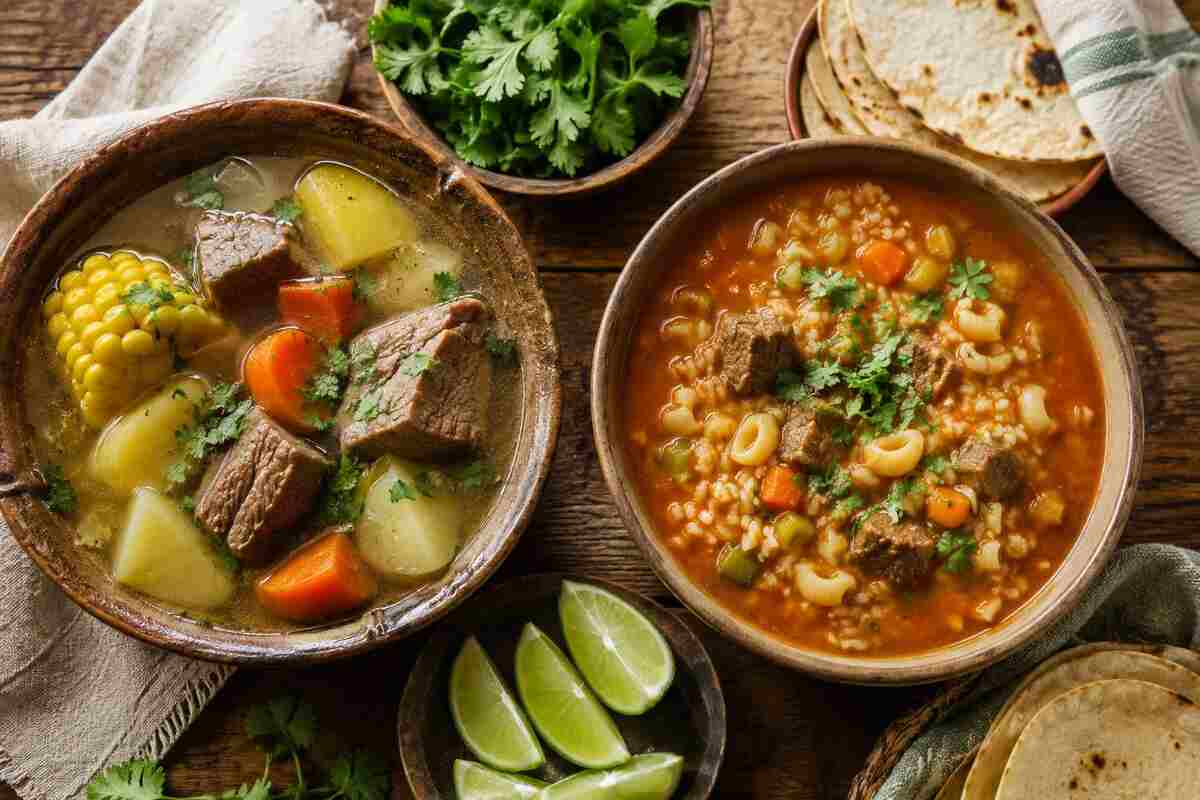
Caldo de res and sopa de res look almost identical on the surface: both are beef soups loaded with corn, carrots, and potatoes. But they’re not quite the same dish.
This guide breaks down what separates the two, what goes into each one, and how to choose the right soup for your meal.
What Is Caldo de Res?
Caldo de res means “beef broth,” and that’s exactly what it is: a light, clear soup built on slow-simmered bone-in beef and a mix of vegetables like corn, carrots, potatoes, and chayote. The broth gets its richness from hours of gentle cooking, not from any added thickener.
It’s a staple in Mexican households, often served on Sundays or when someone’s feeling under the weather. A typical bowl comes with lime, chopped onion, cilantro, and warm tortillas on the side.
What Is Sopa de Res?
Sopa de res means “beef soup,” and while it shares the same core ingredients as caldo de res, it’s usually heartier. Cooks often add pasta, rice, or extra starchy vegetables, turning it from a brothy starter into a filling main dish.
In parts of Latin America outside Mexico, “sopa de res” is actually the more common name for what Mexican kitchens call caldo de res. The line between the two isn’t always fixed, it shifts by region and household.
Key Ingredients Compared
Both soups share a base of bone-in beef, corn, carrots, potatoes, and aromatics like onion and garlic. Where they differ is in what gets added on top of that base.
Caldo de res sticks to:
- Bone-in beef (shank or short rib)
- Corn, carrots, potatoes, chayote, cabbage
- Onion, garlic, cilantro
Sopa de res often adds:
- Pasta (fideo) or rice
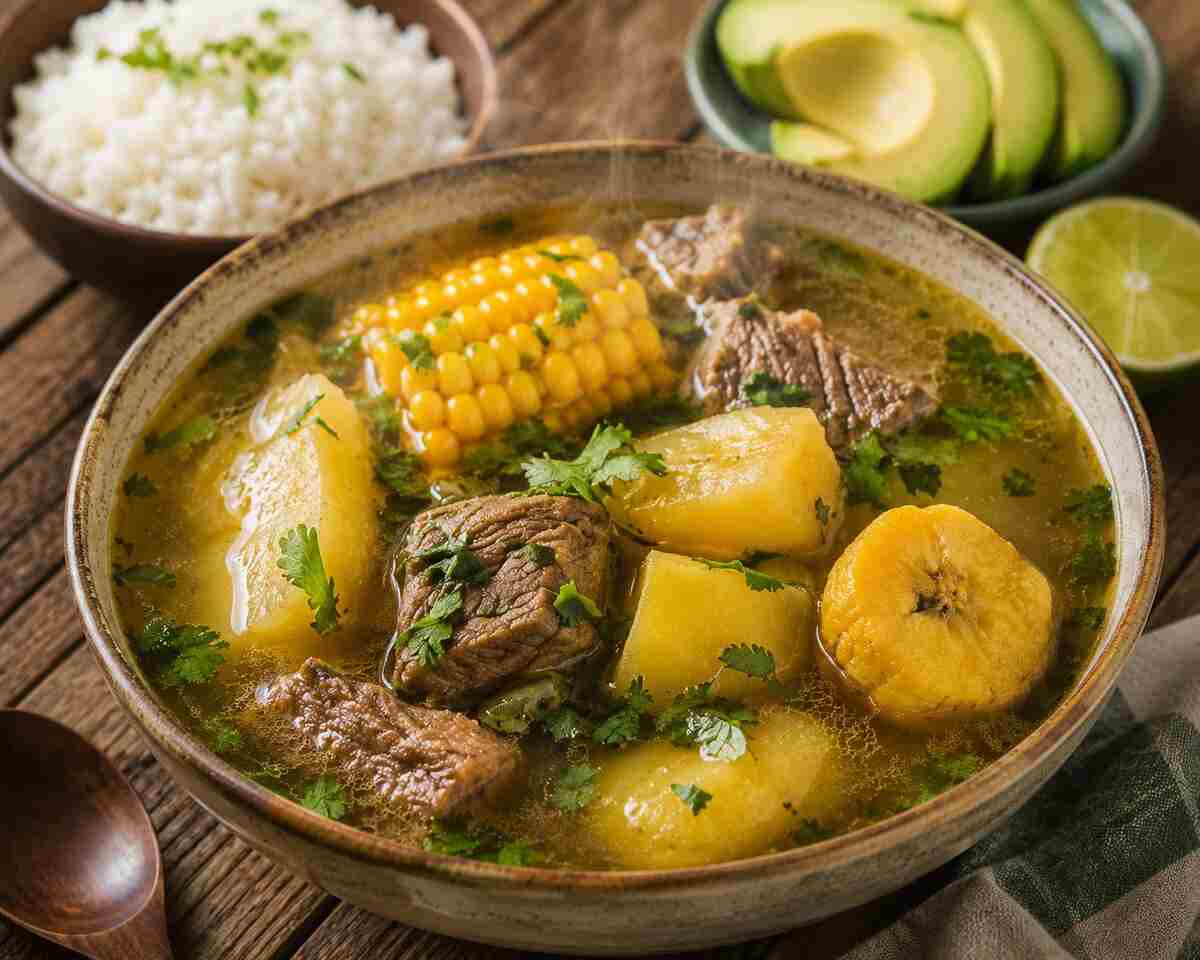
- Extra potatoes or plantains
- Tomato for a thicker base
Broth: Clear vs Hearty
This is the biggest difference between the two. Caldo de res has a clear, light broth, closer to a consommé than a stew. The flavor comes purely from long simmering, not from thickeners.
Sopa de res usually has a thicker, cloudier broth, often from tomato or the starch released by pasta and potatoes. If a recipe calls for tomato paste or noodles, it’s almost certainly sopa de res, even if everything else looks the same.
Vegetables and Add-Ins
Caldo de res keeps vegetables in large, rustic pieces, whole corn rounds, thick carrot chunks, halved potatoes, so each spoonful gets a bit of everything. The vegetables stay firm rather than breaking down.
Sopa de res sometimes cuts vegetables smaller and adds zucchini, green beans, or bell peppers alongside a splash of tomato sauce. Neither style is more “correct”; it comes down to family tradition.
Regional Differences
In northern Mexico, caldo de res tends to be simple and beef-forward, reflecting the region’s ranching culture. Central and southern Mexico often add more chayote, cabbage, and local squash.
Outside Mexico, naming shifts even more. Several Central and South American countries use “sopa de res” for what Mexican cooks call caldo de res, and dishes like Colombian sancocho follow the same spirit with different starches like yuca and plantain.
Cooking Methods
Both soups are traditionally made on the stovetop, simmering for two to three hours to tenderize the beef and build flavor. This method gives the most control over seasoning and broth clarity.
Modern shortcuts work well too. An Instant Pot cuts cooking time to 45–60 minutes, while a slow cooker lets you set it in the morning and come home to a finished soup. Either way, the beef needs enough time to fully tenderize.
Flavor Comparison
Sopa de res tastes richer and heartier thanks to the added starch and sometimes tomato. It has more layers and a fuller mouthfeel.
Caldo de res is cleaner and more delicate, letting the beef and vegetables speak for themselves. Neither is better, it depends on whether you want a light broth or a filling stew.
Nutrition: Which Is Lighter?
Because sopa de res often includes pasta or rice, it tends to run higher in carbs and calories. Caldo de res, being broth-forward, is naturally lighter while still delivering solid protein from the beef.
Both soups offer real nutritional value:
- Protein from the beef
- Collagen and minerals from the bones (source: Cleveland Clinic)
- Vitamin A from carrots, vitamin C from cabbage
How to Serve Each One
Serve caldo de res in a wide, shallow bowl with lime, onion, and cilantro added at the table, alongside warm tortillas and rice. It works well as a starter or a light meal. For a heartier, root-vegetable-forward take on this style of soup, this Colombian sopa de res recipe is worth trying too.
Serve sopa de res in a deeper bowl since it’s heartier, with hot sauce or lime to cut through the richness. Both soups taste even better the next day, once the flavors have had time to deepen.
Which One Should You Make?
Choose caldo de res if you want something light and clean-tasting, ideal as a starter or when you’re not feeling well. Choose sopa de res if you want a heartier, stand-alone dinner with pasta or rice built in.
The best answer might be to make both and let your own taste decide which one becomes the regular in your kitchen.
FAQs
Is caldo de res the same as sopa de res?
Not exactly. Caldo de res is a lighter, clear-broth soup, while sopa de res is usually heartier with pasta, rice, or a thicker base. In some regions, the terms are used interchangeably.
What cut of beef is best for caldo de res?
Bone-in cuts like shank or short rib work best. The bones add collagen and richness as they simmer, and the meat turns tender after a few hours.
Can I make caldo de res in an Instant Pot?
Yes. A pressure cooker cuts cooking time to about 45–60 minutes while still producing tender beef and a flavorful broth.
Why does my caldo de res taste bland?
It likely needs more simmering time, more bones, or more salt. Seasoning gradually as it cooks, rather than all at once, helps build deeper flavor.
Is caldo de res healthy?
Yes. It’s high in protein and collagen from the bones, rich in vitamins from the vegetables, and naturally lower in calories than heartier versions like sopa de res.
Conclusion
Caldo de res and sopa de res come from the same tradition of slow-simmered beef and vegetable soups, but they serve different purposes. Caldo de res is light and clear; sopa de res is thicker and more filling. Try both, and let your kitchen decide which one earns a permanent spot on the menu.