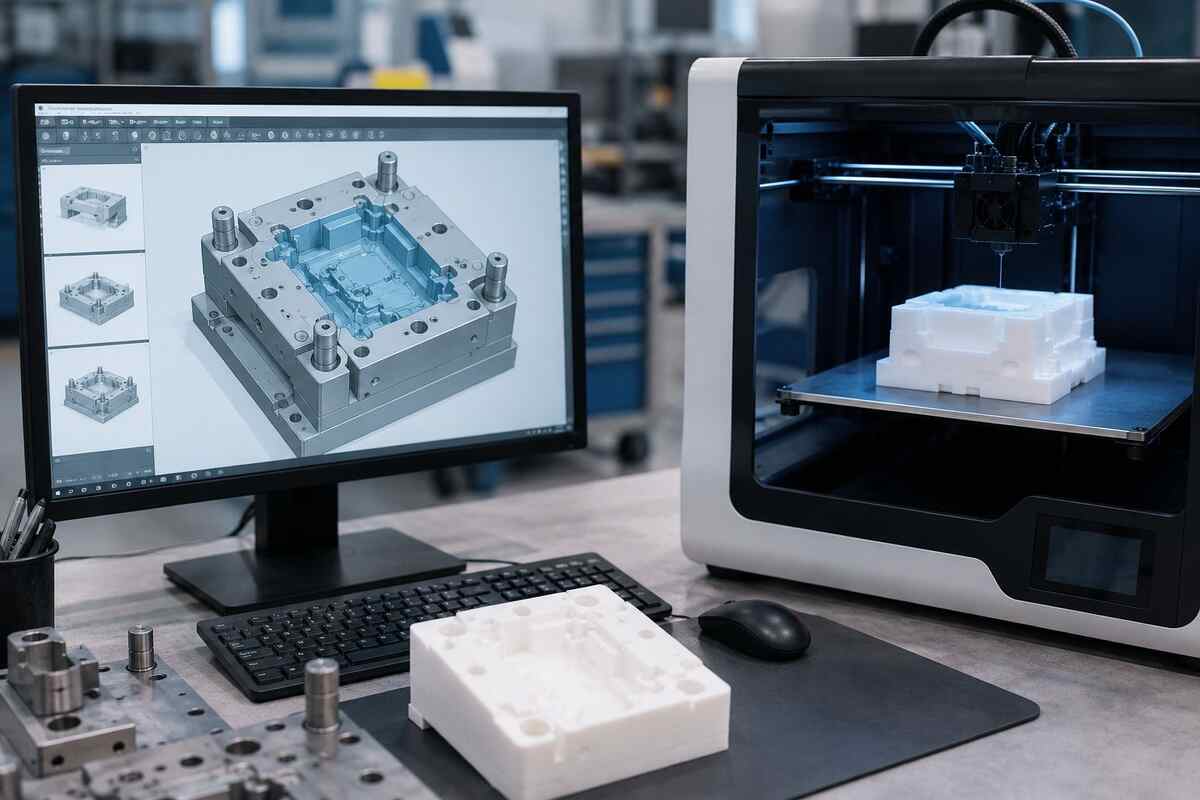
RepMold refers to a modern approach to mold creation and replication. It combines digital design, 3D scanning, and rapid prototyping to produce molds and parts far faster than traditional methods allow. Instead of machining a steel mold from scratch, teams can go from a digital file to a working mold in days.
This guide covers what RepMold actually is, how the process works, how it compares to traditional molding, where it’s used, and what to weigh before adopting it.
What Is RepMold and Why It Matters in 2026
RepMold is a replication-focused molding process. The name comes from “replicate” and “mold” — using digital tools to copy, adapt, and reproduce mold designs quickly instead of building each one manually.
It matters now because manufacturers no longer want to wait weeks for a single prototype mold, or scrap an expensive steel tool over one design tweak. RepMold shifts that work from physical machining to digital modeling, which is far easier to adjust and reuse. It’s also not a single branded product — it’s a category of practice, similar to “rapid prototyping,” which is why definitions vary slightly between providers.
The Origins of Mold Replication Technology
Mold-making has always been central to manufacturing, but traditional tooling is expensive and slow to produce. Over the last two decades, three technologies converged to change that: affordable 3D scanning, flexible CAD/CAM software, and additive manufacturing.
Together, these let manufacturers capture a part’s geometry, refine it digitally, and turn it into a usable mold without ever touching a CNC mill in the early stages. RepMold grew naturally out of this shift rather than arriving as one single invention.
How Does RepMold Work? Step-by-Step Breakdown
The workflow is straightforward once broken into stages:
- Scan or design the original using a 3D scanner or CAD software
- Refine the digital model, correcting imperfections and optimizing for manufacturing
- Produce a master pattern with a 3D printer or CNC machine
- Create the mold, often a flexible silicone cast or a hard machined tool
- Cast or mold the parts using plastic, resin, rubber, or metal
- Inspect and iterate, feeding any adjustments back into the digital file
Step 6 is what sets this apart from older methods. Because the master design lives digitally, revising it and producing an updated mold takes hours instead of weeks.
Key Technologies Behind Modern Mold Replication
A few tools show up in almost every RepMold workflow:
- CAD/CAM software for precise digital design
- 3D scanning hardware, from handheld scanners to lab-grade systems
- Additive manufacturing for master patterns and prototypes
- CNC machining for hard tooling and finishing
- Simulation software to catch shrinkage or stress issues before production
None of these technologies are new individually. What’s changed is how tightly they’re now integrated into one connected pipeline instead of living in separate departments.
Traditional Molding vs This Modern Replication Method
Traditional molding, like injection molding or die casting, requires a machined steel or aluminum tool that can take weeks and cost tens of thousands of dollars. It suits large production runs, but design changes are slow and expensive since they usually mean re-machining the tool.
RepMold-style replication starts from a digital file, so a working mold is often ready in days. It fits prototypes, small batches, and frequently updated designs well, since changes just mean editing and reprinting a file. Neither approach replaces the other; traditional molding still wins for massive production runs, while replication wins on speed and flexibility.
Core Benefits of This Rapid Mold Replication Process
The appeal comes down to a few practical advantages:
- Faster turnaround from design to working part
- Lower upfront tooling costs
- Easier design changes without re-cutting a mold
- Less material waste from scrapped prototypes
- Quicker repairs for damaged or worn parts
These benefits explain the growing interest from manufacturers working with prototypes and smaller production runs, though they come with trade-offs covered further down.
Industries That Rely on Rapid Mold Replication
This approach shows up across several sectors:
- Automotive — prototyping brackets and low-volume replacement parts
- Medical devices — custom prosthetics and surgical guides
- Consumer electronics — testing enclosure designs through multiple revisions
- Aerospace — replicating lightweight, complex components in small batches
- Industrial maintenance — reproducing worn parts for idle machinery
The common thread is a need for accuracy paired with speed, where waiting weeks for traditional tooling isn’t realistic.
Common Challenges and Limitations to Consider
This isn’t a flawless substitute for traditional molding. Material choice can be limiting, since many replication methods work best with plastics, resins, and rubbers rather than heavy-load metal parts. Flexible molds and printed masters also wear out faster than hardened steel, so this approach fits low-to-medium volume better than mass production.
There’s also a learning curve. Teams need time to get comfortable with scanning equipment, CAD software, and simulation tools, and good hardware requires real investment. None of these are dealbreakers, but they matter when deciding if this approach fits a specific project.
Cost and ROI: Is RepMold Worth the Investment?
It depends on your production volume and how often designs change. For large, stable production runs, traditional injection molding usually costs less per unit once tooling expenses are spread out.
For prototyping, frequent redesigns, or small batches, the math flips: you avoid re-machining a mold every time something changes, and you’re not stuck with an expensive single-purpose tool. Most companies report the biggest financial win isn’t the cheapest individual part, but reduced downtime and faster time-to-market.
How to Get Started with This Manufacturing Process
Start small to build confidence in the workflow:
- Pick one part or design you produce often or need urgently
- Get it scanned or modeled with accessible tools like Fusion 360
- Run a simulation to catch design or shrinkage issues early
- Print or machine a master pattern, then cast a flexible mold
- Produce a small batch and compare it to your original specification
This lets you test the process on something low-risk before scaling up or investing in better equipment.
The Future Outlook for Digital Mold Manufacturing
A few developments are likely to shape where this technology goes next: AI-assisted design that suggests optimizations automatically, better hybrid materials that close the durability gap with steel tooling, and cloud-connected manufacturing that lets teams collaborate on one digital mold design in real time.
Traditional molding isn’t going away for large-scale production, but the gap between “quick prototype” and “production-ready part” keeps narrowing, which is good news for smaller manufacturers who couldn’t previously justify custom tooling.
FAQs
Is RepMold the same as 3D printing?
No. 3D printing is one tool within the workflow, often used for the master pattern, but the full process also includes scanning, mold-making, and casting.
What materials can be used with RepMold?
Common choices include silicone, resin, plastic, and sometimes metal, depending on the mold type and durability needed.
Is RepMold cheaper than traditional injection molding?
Usually yes for small batches and prototypes. For very large production runs, traditional molding often stays cheaper per unit.
How long does a typical RepMold project take?
Most projects move from digital design to a finished mold within days, compared to several weeks for traditional tooling.
Can RepMold be used to repair broken parts?
Yes. It’s commonly used to scan a damaged component and reproduce a replacement quickly, which is valuable for equipment that can’t sit idle long.
Conclusion
RepMold isn’t a single product or a fix for every manufacturing problem. It’s a faster way to design, replicate, and produce molds using digital tools instead of relying entirely on traditional machining, and it works best for prototypes, small batches, repairs, and designs that change often.
For high-volume, stable production, traditional tooling still tends to win. But if speed and flexibility matter more than the lowest possible per-unit cost, RepMold is worth serious consideration for your next project.