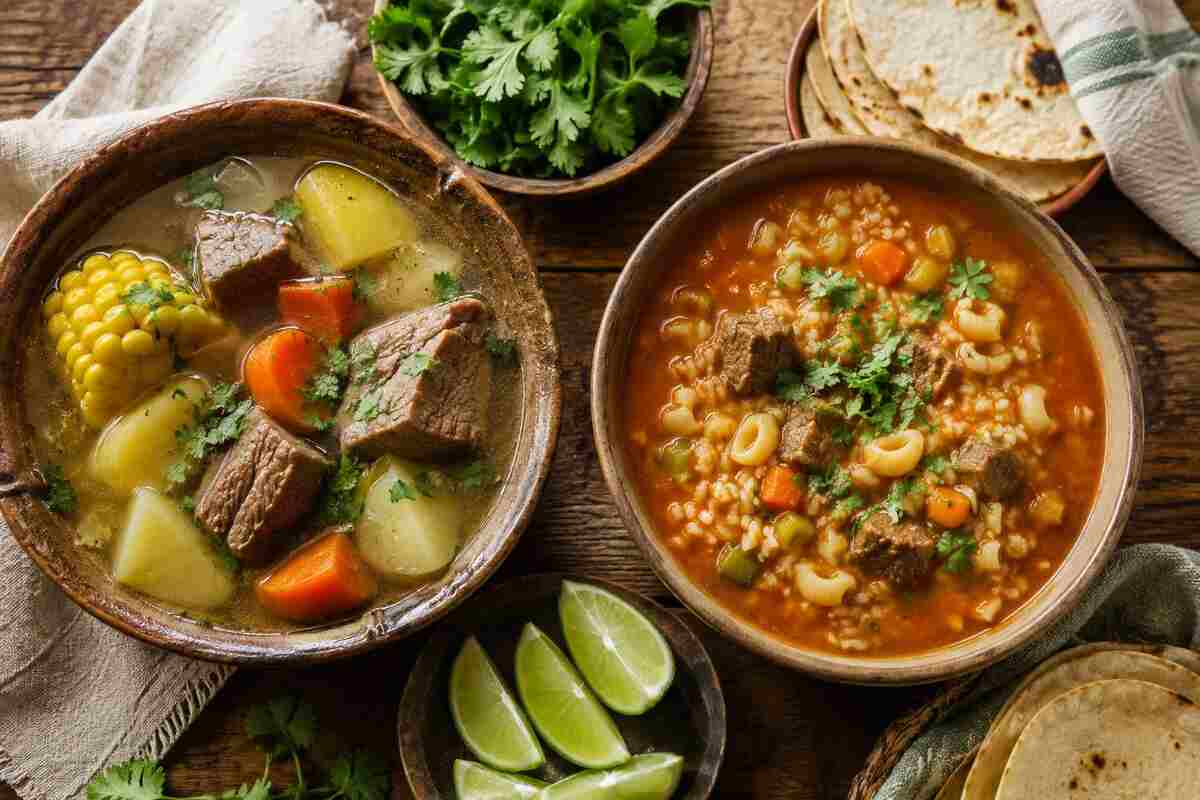
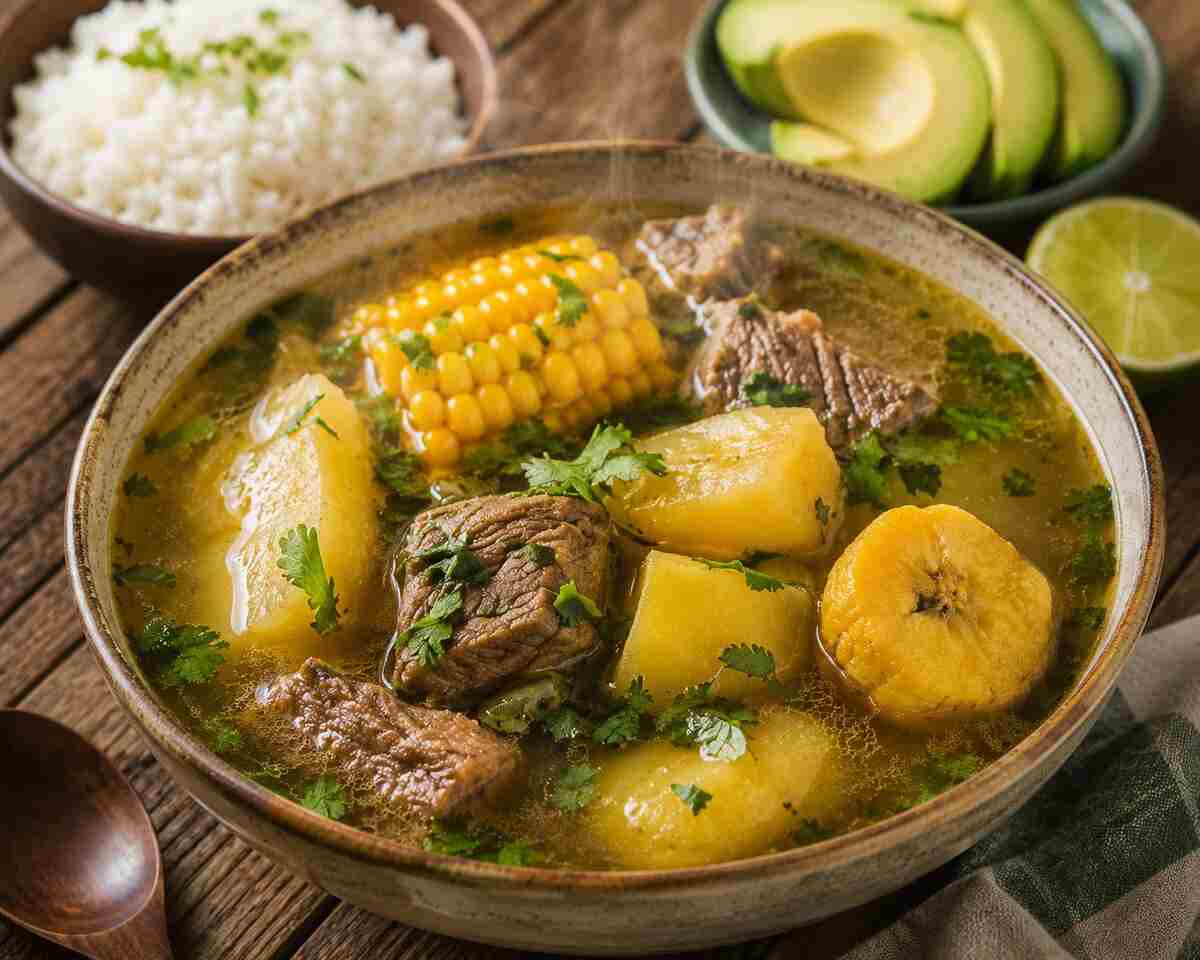
Few dishes feel as much like home as sopa de res. This Colombian beef soup combines slow-simmered meat, root vegetables, and a rich broth into one comforting bowl that’s been passed down through generations.
This guide covers everything you need to make an authentic sopa de res: the best cut of beef, which vegetables to use, how long to cook it, and the small techniques that make the broth clear and flavorful. By the end, you’ll be ready to bring this classic dish to your own table.
What Is Sopa de Res Colombiana and Why It’s So Special
Sopa de res is a hearty beef soup built around slow-cooked meat, a rich broth, and vegetables like potatoes, yuca, corn, and plantain. It’s balanced enough to work as a full meal, and in many Colombian homes, it’s actually the main course rather than a starter. The naming can get confusing too, so if you’re wondering about caldo de res vs sopa de res, the difference often comes down to region and broth thickness.
What makes it special is its history. The recipe is usually learned by watching, not reading, which is why nearly every Colombian grandmother has her own small variation, reflecting the diversity found across Colombian cuisine as a whole.
Ingredients You’ll Need for This Traditional Recipe
For the broth:
- 2 lbs beef shank or short ribs (bone-in)
- 10 cups water
- 1 medium onion, quartered
- 4 garlic cloves
- 2 green onions
- Salt and pepper to taste
For the vegetables:
- 2 medium potatoes, cubed
- 1 cup yuca, cubed
- 2 ears of corn, cut into thirds
- 1 green plantain, sliced
- 1 carrot, sliced
- 1 cup chopped cilantro
Optional additions: achiote for color, cumin for depth, and sliced avocado to serve on the side.
How to Choose the Best Cut of Beef for the Broth
Beef shank, sometimes labeled osobuco, is the classic choice. Its connective tissue and marrow break down slowly during cooking, giving the broth a deep, rich flavor. Short ribs work well too if shank isn’t available.
Look for bone-in cuts, since the bone adds body to the broth that boneless meat can’t match. Avoid lean cuts like sirloin, which cook too quickly and won’t hold up through a long simmer.
Step-by-Step Preparation of Sopa de Res
Start the broth: Cover the beef with water and bring to a boil. Skim off the foam for the first 10–15 minutes to keep the broth clear.
Add aromatics: Add the onion, garlic, and green onions. Season lightly, cover, and simmer for 1.5–2 hours until the beef is fork-tender.
Add root vegetables: Add the potatoes, yuca, and carrot. Simmer for about 15 minutes.
Add corn and plantain: Add both and cook for another 10–15 minutes, until tender but not falling apart.
Finish: Adjust salt, stir in fresh cilantro, and let the soup rest for 10 minutes before serving.
Vegetables and Root Vegetables This Soup Should Include
Each vegetable in sopa de res plays a specific role. Potatoes thicken the broth slightly, yuca adds a firmer, nutty bite, and corn brings natural sweetness that balances the savory base. Plantain contributes a mild starchiness, while carrots add color and a touch of sweetness.
Some families also include ñame or arracacha, two root vegetables common in Colombian cooking. If you can find them at a Latin market, they’re worth trying for extra texture.
Grandma’s Secrets for a Clear, Flavorful Broth
A few small habits make a big difference. Skim the broth early and often, keep it at a gentle simmer instead of a hard boil, and add salt gradually as the beef cooks rather than all at once.
Stir in fresh cilantro at the very end so it stays bright, and let the soup rest for 10 minutes before serving. This short pause allows the flavors to settle and deepen.
How Long to Cook It So It Turns Out Perfect
| Step | Time |
|---|---|
| Initial boil and skimming | 10–15 minutes |
| Simmering beef until tender | 1.5–2 hours |
| Cooking potatoes, yuca, carrot | 15 minutes |
| Cooking corn and plantain | 10–15 minutes |
| Resting before serving | 10 minutes |
Total time: About 2 to 2.5 hours. A pressure cooker can cut the beef-cooking time down to 35–40 minutes; just add the vegetables afterward on the stovetop, since they cook much faster.
Common Mistakes to Avoid When Making Sopa de Res
The most common issue is skipping the skimming step, which leaves the broth cloudy. Using a lean cut of beef instead of shank or short ribs is another frequent mistake, since lean meat turns dry after a long simmer and won’t reach a proper safe internal cooking temperature without drying out first.
Adding all the vegetables at once is also a problem, since potatoes and corn cook at different speeds. Boiling too hard instead of simmering gently, under-seasoning, and skipping the resting period round out the most common pitfalls.
Regional Variations of This Colombian Dish
In Andean regions like Bogotá and Boyacá, sopa de res tends to be simpler, with a lighter broth built around potatoes and corn. Along the Caribbean coast, cooks often add coconut milk or extra plantain for a richer, slightly sweeter version.
In Valle del Cauca, the soup sometimes includes chayote or green beans, making it heartier. Some households blur the line between sopa de res and sancocho, a related but thicker dish with multiple types of meat.
What to Serve With It and How to Store Leftovers
Serve sopa de res with white rice, sliced avocado, lime wedges, and ají for those who like heat. Arepas are also a common side in some regions.
Leftovers keep well in the fridge for up to 4 days, or in the freezer for up to 3 months. Reheat gently on the stove rather than the microwave to keep the vegetables from getting mushy.
Nutritional Benefits of This Homemade Beef Soup
This soup is a genuinely balanced meal. Beef provides protein, iron, and B vitamins, while potatoes and yuca offer complex carbohydrates for sustained energy. Corn adds fiber, and cilantro brings a small boost of vitamins A and C.
Because it’s made from whole ingredients, sopa de res fits easily into a balanced diet. It’s naturally gluten-free, and the sodium level can be adjusted simply by controlling how much salt you add.
FAQs
What is sopa de res made of?
Beef shank or short ribs, potatoes, yuca, corn, plantain, and carrots, simmered in a seasoned broth with onion, garlic, and cilantro.
How long does sopa de res take to cook?
About 2 to 2.5 hours on the stove, or significantly less using a pressure cooker for the beef.
What’s the difference between sopa de res and sancocho?
Sancocho is thicker and often includes multiple meats, while sopa de res focuses on beef with a lighter, clearer broth.
Can I make sopa de res in a slow cooker?
Yes. Cook the beef on low for 6–7 hours, then add the vegetables during the last hour.
Why is my broth cloudy instead of clear?
This usually happens when the initial foam isn’t skimmed off or the soup boils too hard instead of simmering gently.
Is sopa de res healthy?
Yes. It’s a balanced meal with protein, complex carbs, and vegetables, and it works well as part of a nutritious diet.
Final Thoughts
Sopa de res is a dish built on patience and tradition, but it’s not complicated to make. Choose the right cut of beef, skim your broth early, and don’t rush the simmer.
Once you’ve made it a few times, you’ll develop your own instincts for it, just like the generations of home cooks who came before you.