
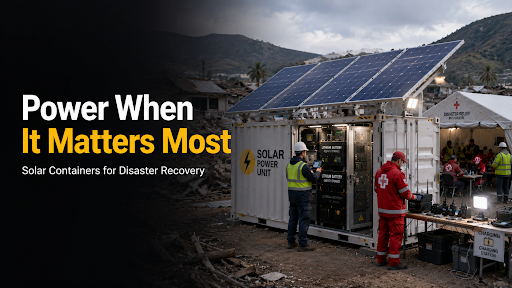
When a natural disaster strikes, electricity is often one of the first services to be disrupted. Floods, earthquakes, hurricanes, and other emergencies can damage power infrastructure and leave communities without access to essential energy. In these situations, fast and reliable power is not just a convenience — it is necessary for communication, medical support, rescue operations, and basic survival needs. A solar container for disaster zones provides a practical solution by delivering renewable electricity quickly when traditional power systems fail.
By combining solar panels, battery storage, and intelligent energy management in a transportable unit, these systems can bring power directly to affected areas. They help emergency teams restore essential services while reducing dependence on fuel-based generators.
Why Power Restoration Is Critical After Disasters
After a disaster, many essential activities depend on electricity. Hospitals need power for medical equipment, rescue teams require communication systems, and shelters need lighting and charging stations.
However, restoring traditional electricity networks can take days, weeks, or even longer depending on the level of damage.
Common challenges include:
- Damaged power lines and substations
- Difficult transportation conditions
- Limited fuel availability
- Remote locations with poor infrastructure
A portable renewable energy system provides a way to overcome these challenges by creating an independent source of electricity.
What Is a Solar Container for Disaster Response?
A solar container is a mobile energy system built inside a protective container structure. It combines solar generation and energy storage equipment into one complete unit that can be transported to different locations.
A typical disaster-response solar container may include:
- Photovoltaic solar panels
- Lithium battery storage
- Solar inverters
- Power distribution equipment
- Smart monitoring systems
- Protective weather-resistant housing
The container design allows the system to be shipped quickly while keeping sensitive equipment protected during transportation.
Once delivered, the system can be deployed to begin producing clean electricity for emergency operations.
How Solar Containers Provide Emergency Power
The operation of a solar container is simple but highly effective.
During daylight hours, solar panels capture sunlight and convert it into electricity. The generated power can be used immediately for connected equipment or stored in batteries for later use.
Stored energy can support operations during:
- Nighttime hours
- Cloudy weather
- Emergency situations with limited sunlight
- High-demand periods
This makes solar containers a reliable energy source even when traditional electricity networks are unavailable.
Advantages of Using Portable Solar Power During Disasters
One of the biggest benefits of a solar container for disaster zones is its ability to provide fast and flexible energy access.
Key advantages include:
Rapid Deployment
Unlike traditional infrastructure projects, solar containers can be transported and installed quickly. This helps emergency teams restore power faster.
Reduced Fuel Dependence
Fuel generators require regular fuel deliveries, which can become difficult during disasters due to damaged roads and supply chain problems. Solar containers use sunlight as their primary energy source.
Lower Operating Costs
Once deployed, solar systems require less ongoing fuel expense and maintenance compared with conventional generators.
Environmentally Friendly Operation
Disaster response often requires large amounts of energy. Renewable systems reduce emissions and help create cleaner emergency operations.
Choosing the Right Solar Container Solution
Not every disaster situation has the same energy requirements. The right system depends on factors such as location, expected power demand, weather conditions, and duration of operation.
A suitable solar container solution should provide:
- Strong weather protection
- Reliable battery storage
- Easy transportation
- Quick setup capability
- Efficient power management
Solar Container Kit focuses on integrated mobile solar solutions designed for flexible energy deployment. Their product range supports applications where reliable electricity is required in remote, temporary, or challenging environments.
Smart Monitoring Improves Emergency Efficiency
Modern solar containers include intelligent control systems that help operators manage energy usage more effectively.
These systems can monitor:
- Solar power production
- Battery charge levels
- Energy consumption
- Equipment status
Real-time information helps emergency teams understand available power capacity and make better decisions during critical operations.
Final Thoughts
Electricity plays a vital role in disaster recovery. Without power, communication slows, medical services become limited, and relief operations face major challenges.
A solar container for disaster zones provides a dependable way to deliver clean energy when it is needed most. By combining renewable generation, battery storage, and mobility, these systems help emergency teams respond faster and support communities during difficult situations.