
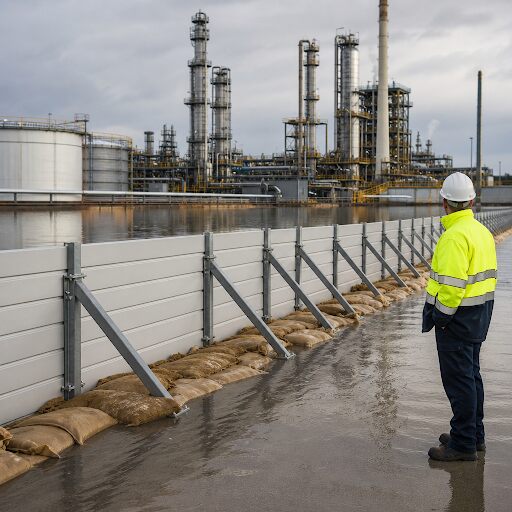
Industrial facilities face a unique and often underestimated threat: water intrusion. Whether caused by extreme weather events, burst pipes, or rising groundwater, flooding in a process plant environment can trigger catastrophic consequences — from equipment damage and production downtime to serious safety hazards for workers. For facility managers and engineers, understanding how to integrate robust flood protection strategies into the broader framework of plant safety is not optional. It is a fundamental operational responsibility.
Why Industrial Facilities Are Especially Vulnerable to Water Damage
Unlike residential or commercial buildings, industrial process plants house complex machinery, chemical storage systems, electrical infrastructure, and precision instrumentation — all of which are acutely sensitive to moisture. A single flooding event can compromise structural integrity, contaminate stored materials, short-circuit control systems, and create hazardous chemical reactions. The financial toll of such incidents often runs into millions, and the human cost can be even greater.
Beyond the immediate physical damage, water intrusion in industrial settings can trigger regulatory violations, environmental contamination, and long-term reputational harm. This is why proactive flood mitigation must be embedded into facility design, maintenance schedules, and emergency response planning from the outset.
Common Sources of Water Intrusion in Process Plants
Water can enter an industrial facility through numerous pathways. Groundwater seepage through foundation walls and floors is one of the most persistent challenges, particularly in older facilities or those built in low-lying areas. Surface water runoff during heavy rainfall events can overwhelm drainage systems, while internal sources such as cooling tower leaks, pipe failures, and condensation accumulation also contribute significantly to moisture-related damage. Identifying and addressing each of these entry points requires a systematic, engineering-led approach.
Sump Pump Systems: The First Line of Defense
Among the most effective tools in an industrial flood protection arsenal is the sump pump system. Installed in the lowest points of a facility — typically in basements, pump rooms, or below-grade equipment areas — sump pumps actively remove accumulated water before it can cause damage. For process plants, where even a few centimeters of standing water can disable critical equipment, these systems are indispensable.
Industrial-grade sump pump installations differ significantly from their residential counterparts. They must handle higher flow rates, operate continuously under demanding conditions, and integrate seamlessly with facility monitoring and alarm systems. Redundancy is also critical: dual-pump configurations with automatic failover capabilities ensure that a single pump failure does not leave the facility exposed. For a detailed overview of how proper sump pump installation serves as a primary flood defense mechanism, understanding the engineering principles behind these systems is essential for any facility manager.
Selecting the Right Pump Capacity for Industrial Applications
Sizing a sump pump system for an industrial facility requires careful hydraulic analysis. Engineers must calculate the maximum expected water inflow rate based on site hydrology, drainage area, and historical rainfall data. The selected pump must exceed this inflow rate with sufficient margin to account for peak storm events and potential equipment degradation over time. Submersible pumps with cast iron or stainless steel construction are typically preferred for their durability in harsh industrial environments.
Engineering Controls for Comprehensive Water Management
Sump pumps, while vital, represent just one component of a comprehensive water management strategy. Effective flood protection in industrial settings requires a layered approach that combines passive and active engineering controls. Perimeter drainage systems, waterproof membranes, elevated equipment platforms, and sealed conduit entries all work in concert to reduce the risk of water intrusion reaching critical assets.
According to engineering control guidelines published by NIOSH, the hierarchy of controls in occupational safety places engineering solutions above administrative measures and personal protective equipment. This principle applies directly to flood risk management: designing water out of the problem is always preferable to responding to it after the fact. Facility engineers should conduct regular risk assessments to identify vulnerabilities and prioritize capital investments accordingly.
Monitoring and Early Warning Systems
Modern industrial facilities increasingly rely on sensor-based monitoring to detect water intrusion at the earliest possible stage. Water level sensors, moisture detectors, and automated alarm systems can alert maintenance teams to developing problems before they escalate into emergencies. Integration with building management systems (BMS) allows for centralized monitoring and rapid response coordination. In high-value process environments, real-time data logging also supports post-incident analysis and continuous improvement of flood protection protocols.
International Process Plants: Expertise in Industrial Facility Solutions
When it comes to sourcing, evaluating, and deploying equipment for complex industrial environments, experience and specialization matter enormously. International Process Plants brings decades of expertise to the industrial sector, offering a comprehensive inventory of process equipment and plant solutions that support facility managers in building resilient, efficient operations. Their deep understanding of industrial systems — from fluid handling to process control — makes them a trusted partner for facilities navigating the challenges of both operational performance and risk mitigation.
Whether a facility is upgrading aging infrastructure, expanding capacity, or implementing new safety systems, having access to quality-assured equipment from a knowledgeable supplier is a critical advantage. International Process Plants’ broad portfolio and technical expertise enable clients to make informed decisions that align with both engineering requirements and budget constraints.
Maintenance Planning and Long-Term Flood Resilience
Even the most sophisticated flood protection systems will fail without consistent maintenance. Sump pumps must be tested regularly — ideally monthly — to confirm operational readiness. Drainage channels and collection pits should be inspected and cleared of debris on a scheduled basis. Waterproof coatings and seals require periodic inspection and reapplication as they degrade over time.
Facility managers should also develop and rehearse emergency response plans that specifically address flooding scenarios. These plans should define clear roles and responsibilities, establish communication protocols, and identify pre-positioned resources such as portable pumps, water barriers, and emergency shut-off procedures for critical systems. Tabletop exercises and site drills help ensure that all personnel are prepared to act quickly and effectively when a real event occurs.
Integrating Flood Protection into Capital Planning
Flood protection should not be treated as an afterthought or a reactive expense. Forward-thinking facility managers incorporate water management infrastructure into long-term capital planning, treating it as a core component of asset protection strategy. This approach allows for phased investment, ensures compatibility with other facility systems, and supports compliance with environmental and safety regulations.
Conclusion: Building Flood-Resilient Industrial Facilities
The threat of flooding in industrial process environments is real, consequential, and growing as climate patterns become increasingly unpredictable. Protecting a facility requires more than a single solution — it demands a coordinated strategy that combines sound engineering design, reliable equipment, proactive maintenance, and well-trained personnel. By investing in layered flood protection systems, leveraging expert partners, and embedding water management into the fabric of facility operations, industrial operators can safeguard their assets, protect their workforce, and maintain the continuity of production that their businesses depend on.