
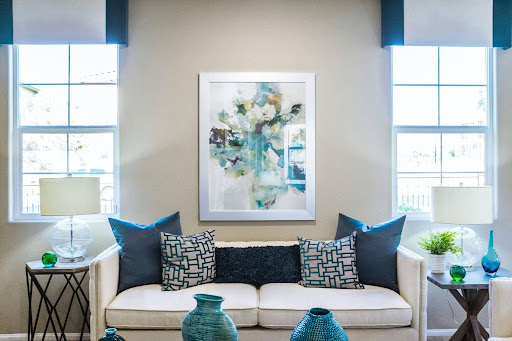
There was a time when decorating with art meant hanging a framed print above the sofa and calling it a day. However, this is not the only way how you can inject art into your home. Recently, interiors have become increasingly expressive, and homeowners are embracing spaces that blur the line between gallery, home and personal archive. According to Houzz’s latest renovation research, homeowners continue to prioritize personalization over resale-minded neutrality, while Pinterest has reported sustained growth in searches related to maximalist interiors, curated collections, and statement décor. In other words, people are becoming more comfortable with rooms that tell stories rather than simply coordinate.
If you’re ready to move beyond predictable gallery walls, here are ten unconventional ideas that prove great interiors don’t have to play by the rules.
Let the Ceiling Become the Canvas
Most people instinctively decorate vertical surfaces, leaving ceilings as blank expanses of white. Yet designers have increasingly embraced the “fifth wall” as an opportunity for visual expression.
A hand-painted mural overhead, an oversized abstract composition, or even sculptural installations suspended from above can completely alter the perception of a room. Rather than drawing the eye outward, the artwork creates intimacy by encouraging visitors to look up: a surprisingly emotional experience that transforms everyday moments.
Build an Entire Room Around One Extraordinary Piece
Instead of selecting artwork after the furniture arrives, reverse the process. Perhaps it’s an oversized contemporary painting inherited from family, an antique tapestry discovered while traveling or an unexpected sculpture from a local artist. Allow its colors, scale and emotional tone to dictate everything from upholstery to lighting.
Replace Traditional Headboards With Art
Bedrooms can easily become some of the most experimental spaces at home. Instead of a conventional upholstered headboard, consider commissioning a large painted panel, installing carved wood reliefs or mounting a dramatic textile. Besides introducing personality, these oversized pieces create a hotel-like focal point without requiring excessive furniture.
Cover an Entire Wall in Sculptural Texture
Paint isn’t the only way to decorate your walls. Three-dimensional installations bring movement that changes throughout the day as natural light shifts. The result feels less like decoration and more like architecture. Texture has become increasingly influential in interior design as minimalist color palettes give way to tactile richness.
Treat Bathrooms Like Mini Galleries
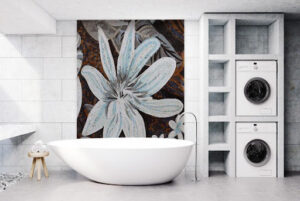
Bathrooms are often overlooked as spaces for collecting art, despite being among the most frequently used rooms in the house. Stone sculptures, framed photography, unusual ceramics and even carefully selected mosaic artwork can introduce unexpected elegance. Moisture-resistant materials make many contemporary installations surprisingly practical, while the relatively compact scale allows bolder experimentation than larger living areas.
Turn Everyday Furniture Into Functional Sculpture
Who says art has to hang on a wall? A coffee table carved from a single block of timber, a hand-cast resin console, or a dramatically shaped chair can function equally as furniture and sculpture. Increasingly, collectible design is merging fine art with functional objects, with galleries dedicated to this crossover attracting growing international attention at fairs like Design Miami and Milan Design Week.
Display Collections Like Museum Exhibitions
The difference between clutter and curation often comes down to presentation.
Instead of scattering treasured objects throughout the home, group them thoughtfully by color, material, or story. Install museum-style shelving, dedicate niches to favorite finds or arrange ceramics beneath focused lighting. It’s an unexpected way to display objects for a home, and especially because of that it creates an unforgettable impression.
Blur the Boundary Between Indoors and Outdoors
Gardens deserve artistic ambition too. Large-scale installations nestled among planting, sculptural water features or weathered stone works become part of the landscape itself. As seasons change, so does the artwork’s relationship with its surroundings.
Commission Something Made Specifically for Your Home
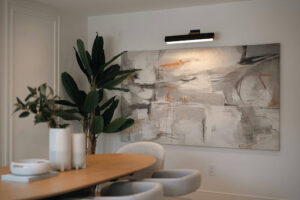
Bespoke interiors continue gaining momentum, particularly as homeowners seek spaces that feel impossible to replicate. Working directly with an artist to create site-specific work, for example painted panels, sculptural lighting or handcrafted mosaics, produces pieces that respond to the home’s proportions, materials and natural light. Rather than filling an empty wall, the artwork becomes part of the home’s identity. Custom commissions also strengthen connections between homeowners and independent artists, reflecting a broader appreciation for craftsmanship over mass production.
Create Unexpected Moments in Transitional Spaces
Hallways, stair landings, and entryways are often treated as passages. However, these overlooked areas offer perfect opportunities for playful artistic interventions. Imagine an oversized installation at the top of the stairs, a painted doorway, illuminated wall reliefs or a series of suspended sculptures that reveal themselves gradually as visitors move through the home. Because these spaces are experienced in movement, it provides homeowners with freedom to be more bold and expressive when it comes to design.