
Every small business owner eventually reaches that moment. Payroll has gotten complicated enough that a spreadsheet no longer cuts it, and you start looking at software. The name ADP comes up almost immediately. It is everywhere. You have probably heard it mentioned in passing by other business owners, seen it in HR articles, maybe even gotten a sales call from one of their representatives. ADP feels like the safe choice, the established choice, the one your accountant has probably worked with before.
But safe and right are not always the same thing. And for small businesses especially, the difference between those two things often shows up on the monthly invoice.
This comparison looks at TimeTrex vs ADP for small business payroll honestly, without the glossy marketing language. The goal is to help you understand what you are actually getting with each platform so you can make the right call for your business, your team, and your budget.
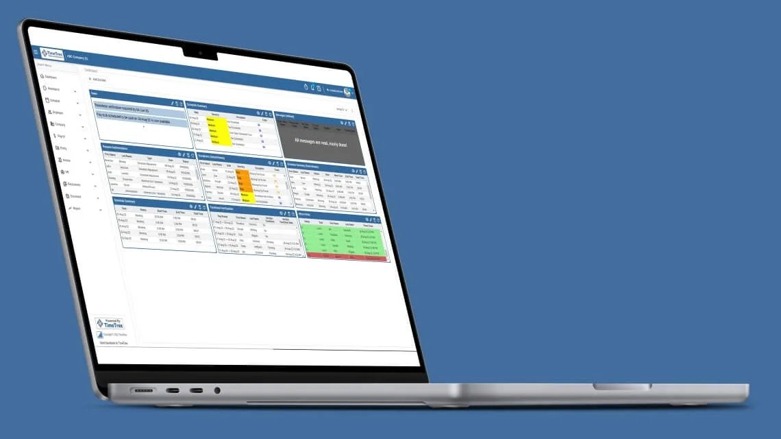
Source: TimeTrex
The Fundamental Difference in Approach
ADP is a payroll processing company that has added HR and time tracking features over the years. Its roots are in outsourced payroll services, and that heritage shows in how the platform is structured, how it is priced, and who it is designed to serve. Enterprise clients and mid-market companies have historically been ADP’s sweet spot.
TimeTrex is a workforce management platform built to handle time tracking, scheduling, and payroll as a unified system from day one. The TimeTrex workforce platform is not a separate module you add on. It is the same platform where your employees clock in, where managers build schedules, and where attendance records live. That integration is a meaningful structural difference.
Pricing: What You Actually Pay
This is where many small business owners feel the difference most immediately. ADP’s pricing for small business products is not publicly listed in a clear, straightforward way. You have to request a quote, and the final number depends on your employee count, the features you select, and which sales representative you end up talking to. Add-ons like time tracking, HR features, and compliance tools layer on additional fees. Many small businesses end up paying more than they expected because they did not fully understand what was and was not included in their base package.
TimeTrex publishes its pricing openly. Businesses can see what each tier includes and request a custom quote for larger teams. For small businesses especially, knowing what you will pay before you commit is not a minor convenience. It is a budgeting necessity.
Time Tracking Integration: The Feature That Changes Everything
If you have hourly employees, the connection between time tracking and payroll is not a peripheral feature. It is the core of how payroll works. With ADP, time tracking is often handled through a separate product that integrates with the payroll system. Depending on which ADP product you are using, that integration can require manual data exports, fee-based add-ons, or additional configuration.
With TimeTrex, there is no integration required because there is no separation. Employees clock in. Those hours are recorded. When payroll runs, the same system that tracked the hours calculates the paycheck. Overtime is flagged automatically. Custom deductions are applied. Tax calculations run without manual input. For a small business owner doing payroll themselves or with limited help, that seamlessness dramatically reduces the chance of making an expensive mistake.
Open Source and On-Premise: A Differentiator Many Small Businesses Do Not Know Exists
One of the most distinctive things about TimeTrex is that it offers an open source Community Edition. For businesses that have the technical capacity to self-host, this option eliminates the per-employee monthly fee entirely. There is no cloud subscription, no per-payroll charge, and no vendor holding your data. ADP does not offer anything remotely similar.
Even for businesses that prefer the managed cloud version, TimeTrex offers on-premise deployment for companies with data sovereignty requirements or industry-specific compliance needs. This is particularly relevant for healthcare businesses, legal firms, or any organization that handles sensitive employee information and wants it kept on their own infrastructure.
Where ADP Has the Edge
Being honest in a comparison means acknowledging where each platform excels. ADP has a longer track record in the payroll processing market and an extensive network of accountants and bookkeepers who are already familiar with its output formats. If your accountant has been working with ADP for years, there may be some efficiency in keeping that workflow intact.
ADP also has a larger selection of HR add-ons for businesses that want to handle recruiting, benefits administration, and performance management all in one vendor relationship. If you are looking for a single vendor to cover everything from HR to payroll to benefits, ADP has a broader catalog.
Which One Is Right for Your Business?
If you run a small business with hourly employees and you want time tracking and payroll to work together seamlessly, without paying add-on fees or doing manual data transfers between systems, TimeTrex is the stronger choice. The transparent pricing, the integrated platform, and the flexibility of cloud or on-premise deployment make it particularly well suited to growing businesses that do not want to outgrow their payroll software.
If you are deeply embedded in the ADP ecosystem and your accountant has built workflows around ADP’s output, switching may not be worth the transition cost in the short term. But if you are making this decision fresh, or frustrated enough with your current costs to consider a change, TimeTrex is worth a serious look. The Capterra payroll software comparison tool also offers independent user reviews if you want to see how real businesses have weighed these options.
Payroll should not be the most stressful part of running your business. With the right software, it does not have to be.