
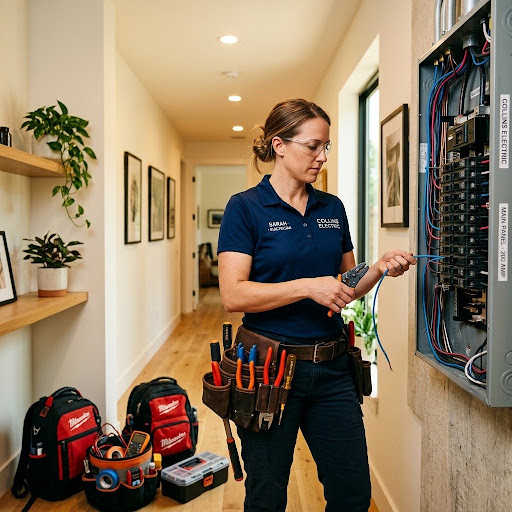
Electrical issues rarely announce themselves with fanfare. One day, a light switch feels a little sluggish. Next, a circuit breaker trips for the third time this week. Then comes the burning smell you can’t quite locate. These aren’t coincidences—they’re warning signs. And the longer they go unaddressed, the more expensive (and dangerous) the consequences can be.
At Collins Electric, we’ve seen it all. From flickering outlets that turn out to be loose wiring deep inside the wall, to outdated panels that simply can’t keep up with the demands of a modern home. What surprises most homeowners isn’t the repair itself—it’s how early intervention could have prevented so much stress.
The Hidden Cost of Ignoring Electrical Problems
Most people don’t think twice about a single tripped breaker. But electrical faults have a way of compounding quietly. A small wiring issue can increase your energy consumption without you even noticing. According to the U.S. Fire Administration, electrical fires account for approximately 24,000 home fires each year—many of which trace back to faults that showed early warning signs.
The financial impact compounds, too. A minor repair caught early might cost a fraction of what a full panel replacement or fire-related restoration demands. Proactive attention to your electrical system isn’t just smart—it’s one of the most cost-effective decisions a homeowner can make.
What Makes a Reliable Electrical Repair Service?
Not all electrical work is created equal. The difference between a rushed job and a thorough repair can mean the difference between a safe home and a recurring hazard. Here’s what separates quality electrical service from the rest:
Accurate Diagnosis Before Any Repair Begins
The best electricians don’t just fix what’s visible—they find what’s causing it. That means testing circuits, inspecting panel connections, and identifying underlying issues that might not be obvious on the surface. A symptom-only approach often leads to the same problem returning weeks later.
Transparent Communication Throughout the Process
Homeowners deserve to understand what’s happening in their own property. A trustworthy electrical service provider explains the issue clearly, outlines the repair plan, and walks you through any safety concerns—without using jargon designed to confuse rather than inform.
Quality Materials and Code Compliance
Every repair should meet current National Electrical Code (NEC) standards. Using substandard components to cut corners might save money upfront, but it creates liability and safety risks down the line. Reliable service means using the right materials for the job, every time.
Common Electrical Repairs That Shouldn’t Wait
Certain issues carry a sense of urgency that others don’t. These are the repairs that homeowners most often delay—and that most consistently cause regret when left unaddressed.
Outdated Wiring
Homes built before 1980 may still have aluminum or knob-and-tube wiring that poses real safety risks under modern electrical loads. Upgrading this wiring dramatically reduces fire risk and improves overall system reliability.
Overloaded Circuits
If you’re regularly resetting breakers or relying on power strips to compensate for a lack of outlets, your home’s circuit capacity may no longer match your needs. Adding dedicated circuits is a cleaner, safer solution than working around a system that’s already struggling.
Faulty Outlets
An outlet that sparks, feels warm to the touch, or stops working entirely is more than an inconvenience. It’s a potential ignition point. GFCI (Ground Fault Circuit Interrupter) upgrades in bathrooms, kitchens, and outdoor areas are a simple but critical protection measure.
Flickering Lights
This one gets dismissed constantly. But persistent flickering—especially under load—can indicate loose connections or failing wiring that generates heat inside your walls. It’s worth investigating sooner rather than later.
Why Collins Electric Gets It Right
Collins Electric has built its reputation on doing the work properly the first time. Our licensed electricians bring not just technical skill, but genuine commitment to the safety of every home and business we serve. We understand that inviting someone into your property to work on its electrical system requires trust—and we don’t take that lightly.
Every job, from a single outlet repair to a full panel upgrade, receives the same level of attention. We don’t treat small jobs as unimportant, because we know that small electrical faults can grow into big problems. That philosophy shapes everything we do.
Our team stays current with the latest code requirements and industry best practices, so you never have to wonder whether the work we’ve completed meets the standard it should.
When Is the Right Time to Call an Electrician?
The honest answer? Earlier than most people do. The instinct to wait—to see if the problem resolves itself—rarely works in your favor with electrical systems. Unlike a dripping faucet, electrical faults don’t always give obvious warnings before they escalate.
Some clear signals to call sooner rather than later:
- Breakers that trip repeatedly under normal use
- Outlets or switches that feel warm or discolored
- A burning or plastic-like smell near panels or outlets
- Lights that dim when appliances run
- A panel that’s more than 25 years old
If any of these sound familiar, the time to act is now—not after the next incident.
The Real Value of Getting It Done Right
Electrical Repair handled by qualified professionals doesn’t just restore function to your home—it adds lasting value, keeps your family protected from preventable hazards, and gives you the confidence that comes from knowing your electrical system is in the hands of people who take every detail seriously.
Collins Electric is ready to help. Whether you’re dealing with an urgent fault or simply want a professional assessment of your home’s electrical health, our team is equipped to handle it with the skill and care your property deserves.
Reach out to Collins Electric today, and let’s make sure your electrical system works exactly the way it should.