
Why Sweatshirts Are Quietly Taking Over Casual Style
Look at any well-dressed guy under 35 in 2026, and you’ll spot the same pattern. The cleanest outfits aren’t built around shirts or sweaters anymore. They’re built around sweatshirts. A heavyweight Parke sweatshirt, a fitted cap, broken-in denim, and one good watch on the wrist now beat any business-casual outfit at almost every social setting outside the office. So what changed? Comfort caught up with style, and casual menswear stopped pretending it needed structure to look polished. The sweatshirt sits at the center of this shift because it works harder than any other single piece in a modern wardrobe. It pairs with denim for a coffee run. It layers under an overshirt for dinner. It works under a leather jacket for an evening out. Plus, a quality sweatshirt actually looks better as it ages, with the brushed interior softening and the fabric draping more naturally after twenty wears. The catch is that most people don’t know the difference between a $30 mall sweatshirt and a $100 specialty piece. They look almost identical in photos. So buyers default to the cheap option, then wonder why their outfits never quite hit the mark in real life. The gap is real, and it shows up in fabric weight, construction details, and how the piece holds up across seasons. The rest of this guide breaks down what actually separates a great sweatshirt from a forgettable one. Plus, the specific ways to pair it with a cap and a watch to build a complete casual look that photographs well and feels right in the moment. Honestly, I think the sweatshirt is the single most underestimated piece in modern menswear. Once you build a wardrobe around the right one, everything else falls into place.
What Separates a Quality Sweatshirt From the Rest
The differences between a mediocre sweatshirt and a quality one show up in three specific places. The first is fabric weight. Cheap sweatshirts use 280 to 320 gsm cotton blends with a high polyester percentage to keep costs down. Quality sweatshirts use 380 to 450 gsm cotton, often with brushed fleece interiors that feel different against the skin. That weight difference translates directly into how the piece drapes on the body. A heavier fabric holds its shape and falls in clean lines. A lighter one clings awkwardly and bunches at the waist. The second factor is the ribbing at the cuffs, hem, and neckline. Quality ribbing uses tight double-stitch construction with proper elastic blends that snap back to shape after stretching. Cheap ribbing uses single-stitch construction and weaker elastic that stretches permanently within five wears. Once that happens, the piece is essentially dead. You can wear it around the house, but it won’t photograph well or sit right in public. The third factor is the shoulder seam placement. A well-cut sweatshirt has the shoulder seam right at the natural shoulder bone, not dropping halfway down the bicep. Drop-shoulder cuts work for specific aesthetic choices, but a sloppy drop happens because the pattern wasn’t drafted carefully. So watch the shoulder line in product photos before you buy anything. One hands-on detail worth flagging: the way the neckline sits after the first wash tells you almost everything. A quality sweatshirt’s neckline stays flat and crisp. A cheap one develops a slight wave or twist that never fully comes out, no matter how you wash or hang it. Once you’ve seen this distortion once, you’ll spot it immediately in store mirrors and product photos. It’s the clearest visual tell of fabric quality.
Your Smart Sweatshirt Buyer’s Checklist
Before you commit to any sweatshirt over $50, run through a quick set of verification steps. So I built this checklist after returning enough mediocre purchases to know what actually matters. Here are the seven things to check before clicking buy:
- Confirm the fabric weight in gsm. Look for 380 to 450 gsm minimum for a heavyweight piece. Anything under 320 gsm is too light for proper drape.
- Read the cotton percentage. Aim for 100 percent cotton or at least 90 percent cotton with 10 percent elastane for stretch. High polyester blends pill within months.
- Check the rib construction at cuffs and hem. Photos should show clear double-stitched ribbing with visible thickness, not thin elastic strips.
- Look at the shoulder seam placement. Should sit at the natural shoulder bone in the model photos. Sloppy drops mean sloppy patternmaking throughout.
- Verify pre-shrunk treatment. Quality brands note this in their product descriptions. Without it, expect 5 to 8 percent shrinkage after the first wash.
- Inspect the neckline shape on multiple-sized models. Should sit flat and crisp on every size shown, not warped or twisted on larger models.
- Read at least three reviews mentioning long-term wear. Look for comments about how the piece holds up after 20-plus washes, not just the first impression.
That seven-step checklist filters out about 70 percent of sweatshirts marketed as “premium” without actually delivering on construction. The remaining 30 percent are worth considering seriously. Spending five minutes on these checks will save you the disappointment of receiving a piece that looks decent in photos but feels wrong in person. Plus, the time investment trains your eye to spot quality faster on future purchases. After a few rounds of running this checklist, you’ll start to notice these signals without even thinking about them.
Why a Parke Sweatshirt Wears Better Than Mall Alternatives
Specialty brands hit the construction bar more often than mass retailers, and a parke sweatshirt is a clear example of why the difference matters. The fabric weight runs around 400 gsm cotton with a soft brushed interior that feels noticeably warmer than thinner alternatives. The cuffs and hem use proper double-needle ribbing that holds shape through hundreds of wears. Plus, the shoulder seams sit clean at the natural shoulder line, which keeps the silhouette tight even on slimmer frames. The fit itself runs slightly relaxed without being oversized, which works well across body types. A piece in the right cut creates a clean V-shape from shoulder to waist when worn over a tee or mockneck, and that visual line is part of why it photographs well. Compare that to a typical mall sweatshirt at the $30 to $40 price point. The fabric runs 300 gsm at best with polyester filler that feels slick rather than soft. The ribbing is single-stitch and stretches out by month two. The shoulder seam drops down the bicep, breaking the natural body line. So the visual outcome ends up being significantly different even when the two pieces look similar in catalog photos. The other factor worth flagging is colorfastness. Specialty brands use reactive dyes that hold their depth through 50-plus washes. Cheap brands use direct dyes that fade noticeably within fifteen washes, turning a black sweatshirt into a sad grey within a season. So when you build a sweatshirt-first wardrobe, the color holding up matters as much as the construction. A $100 piece that looks like new after two years beats three $30 pieces that all looked worn out after six months.
How to Style a Sweatshirt Across Different Occasions
A sweatshirt isn’t just one outfit. It’s the base for at least six different looks depending on what you pair with it. So here’s the breakdown of how a single sweatshirt translates across various contexts in a real wardrobe:
- Coffee or casual breakfast: Sweatshirt over a plain tee, slim straight denim, white sneakers, simple cap, watch on wrist. The cleanest version of casual.
- Smart-casual lunch or daytime meeting: Sweatshirt over an Oxford shirt with the collar showing, dark denim or chinos, leather sneakers or boots, watch. Reads as intentional without being overdressed.
- Layered fall evening look: Sweatshirt under an overshirt or chore jacket, denim, work boots, beanie if cold enough. The visible sweatshirt collar and hem add visual depth to the outfit.
- Athleisure rest day: Sweatshirt with matching joggers (in the same color family, not necessarily a matching set), running shoes, cap. Comfort-focused but still composed.
- Concert or casual evening out: Sweatshirt under a leather jacket or denim trucker, slim denim, boots, watch. The sweatshirt adds warmth without bulk under the outer layer.
- Weekend errands: Sweatshirt solo with denim and sneakers, cap, watch. The simplest version, but still polished if the pieces are of quality.
- Casual office Friday: Sweatshirt over a button-down with the collar peeking out, chinos or dark denim, leather sneakers, watch. Works in creative or tech-leaning workplaces.
That’s seven distinct outfits from a single sweatshirt, which is why this piece earns the foundation slot in a smart wardrobe. The color you choose matters here. A neutral cream, charcoal, or faded black sweatshirt pairs with all seven contexts. A bright color or loud graphic limits you to maybe three of them. So leaning neutral on the sweatshirt itself gives you the most outfit flexibility, and you can add color through accessories like the cap or watch.
The Cap Layer: Why Headwear Completes the Outfit
Caps are the single most underrated accessory in modern menswear, and most people pick them wrong. So getting this right immediately separates your outfits from the average weekend look. The wrong cap reads as childish or out of place. The right cap pulls the whole outfit together and adds visual weight at the top of the frame in photos. A piece like a Zach Bryan cap hits the construction marks that matter. Structured but not stiff crown, slight pre-curve on the brim instead of a perfectly flat skater brim, neutral or muted color that pairs with everything else in the wardrobe, and minimal logo presence. The pre-curve detail matters more than people realize. A brand-new flat brim signals “I bought this last week.” A naturally curved brim looks like the cap has been worn enough to mold to the head, which reads as intentional and lived-in. Even better, slight wear marks on the crown around the back where you grip it on and off add character without making the cap look beaten up. So buying a cap and breaking it in over a few weeks before wearing it to important social events makes a real difference. Color selection should follow the rest of your wardrobe palette. If your sweatshirt is cream and your denim is indigo, a faded black or muted earth-tone cap works well. If your sweatshirt is charcoal, look for caps in olive, deep navy, or warm brown. Matching the cap to your boots or watch strap creates an even cleaner visual line. The fit at the head also matters. A cap that sits too high looks awkward and exposes too much of the forehead. A properly fit cap sits low enough that the brim is just above the eyebrows when you look straight ahead.
The Watch That Finishes the Look
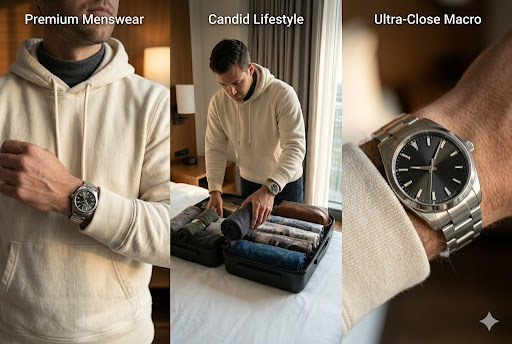
A sweatshirt outfit without a watch feels unfinished, and most people don’t realize it until they see photos of themselves and notice the empty wrist. So the watch is the third piece that completes this casual wardrobe formula. The challenge is that genuine luxury watches start at $5,000 and climb fast, which puts them out of reach for buyers just building into this style. That’s where specialty alternatives come in. A piece from a super clone Rolex collection delivers the classic silhouette (Submariner, Datejust, Day-Date references) at a fraction of genuine retail. The 36mm to 41mm case size pairs naturally with the cuff of a sweatshirt sleeve, which sits naturally around the wristbone when the sleeve is pushed up slightly. The stainless steel finish complements the muted color palette of a sweatshirt-first wardrobe. Dial color matters more than people realize for matching the rest of the outfit. A black or deep blue dial reads sporty and pairs with most casual outfits naturally. A green or champagne dial reads slightly more dressed up and works better with overshirt-layered looks. So picking the dial color to match the dominant tones in your wardrobe makes the watch feel like part of the outfit rather than a separate accessory. The bracelet choice between Oyster (three-link, sporty) and Jubilee (five-link, slightly dressier) shifts the watch’s feel without changing its essential character. Most sweatshirt-leaning casual wardrobes work better with the Oyster bracelet, which keeps the watch in the same casual register as the rest of the look. One concrete observation: a quality automatic watch with a smoothly sweeping seconds hand changes how the wrist photographs. Light catches the polished bezel, the bracelet adds visual weight, and the whole arm reads as intentional rather than incidental.
Building This Wardrobe Without Overspending
Putting this whole foundation together (sweatshirt, cap, watch, plus the supporting pieces of denim and boots) runs $700 to $1,400, depending on how you spread the budget. So most people are better off building it gradually over six to nine months rather than committing all at once. Start with the sweatshirt itself, since it carries the most wear and sets the foundation. Spend $80 to $120 here on a quality piece in a neutral color. Then add the cap next, since caps cost relatively little ($30 to $60) and immediately improve every outfit they appear in. After those two pieces are set, the watch becomes the bigger investment, and waiting two or three months to save for it works fine. The supporting pieces (denim, boots, simple tees) can come from anywhere in your existing wardrobe initially. Upgrade them slowly as the foundation pieces train your eye to spot quality. Buying second-hand for the supporting layers can save serious money. Quality denim shows up on resale sites in barely-worn condition at 40 to 60 percent off retail. Boots can be found at similar discounts if you’re patient. Wait for end-of-season sales on the higher-ticket items. Specialty brands typically run clearances in late February and late August, which can save you 20 to 30 percent on the same pieces. Now, an honest limitation: this sweatshirt-first approach doesn’t work for every setting. Formal offices, traditional corporate environments, and certain client-facing roles still expect button-downs and structured pieces. So this wardrobe is built for off-hours, casual creative work environments, and social situations rather than as a replacement for professional dress. Knowing where it fits saves you from awkward situations and lets the wardrobe deliver its full value in the contexts it actually works for.
Final Words
A sweatshirt-anchored wardrobe quietly outperforms more complicated outfit systems for most casual situations. So if you’ve been chasing trends or building a closet that feels disconnected, simplifying back to a quality sweatshirt, a good cap, and one classic watch will probably make your daily style noticeably better. Start with the sweatshirt. Add the cap within a month. Save for the watch when you can. A year from now, you’ll have a foundation that handles almost any casual setting in your life without needing constant new purchases.
FAQs
Q: How much should I spend on my first quality sweatshirt?
Plan for $80 to $120 from a specialty brand. Anything cheaper usually skips construction details. Anything pricier is usually paying for designer markup, not better quality. The mid-tier sweet spot delivers real value.
Q: Can I wear a sweatshirt to a casual dinner?
Yes, if you pair it correctly. Layer the sweatshirt over a collared shirt with the collar peeking out, add slim dark denim or chinos, leather sneakers or boots, and a watch. That combination reads as intentional and dressed up enough for most casual restaurants and dinner spots.
Q: What color sweatshirt should I buy first?
Start with cream, charcoal, or faded black. These three colors pair with literally every other piece in a casual wardrobe and never feel out of place. Add color or graphic options only after the neutral foundation is set.
Q: How long should a quality sweatshirt last?
A heavyweight specialty sweatshirt worn one to two times a week should last three to five years before showing significant wear. The fabric will soften, and the color may fade slightly, but the shape and construction should hold up through hundreds of wears.
Q: Do I really need a cap to make this wardrobe work?
No, but it adds noticeable polish to outfits where you’d otherwise look incomplete. Caps work especially well for casual settings, weekend errands, and outdoor activities. If caps don’t suit your face shape or style preference, a beanie in cooler weather serves a similar function.