If you’re shopping for a used Chevy Equinox, you’ve probably already come across warnings about it burning oil faster than it should. This is one of the most well-documented reliability issues in the Equinox’s history, and it’s the main reason so many buyers search for Chevy Equinox years to avoid before buying one.
This article breaks down what actually went wrong, which model years were affected, how to spot the problem in a used car, and which years you can shop for with more confidence.
What Causes Oil Consumption Problems in the Chevy Equinox
The issue traces back to the Equinox’s 2.4L four-cylinder engine, introduced during a push for better fuel economy through a redesigned piston and piston ring setup.
The piston rings on these engines don’t always seal properly against the cylinder walls over time. Instead of oil staying where it belongs, small amounts seep past the rings and burn off during combustion along with the fuel.
Some oil consumption is normal as any engine ages. What set this generation of Equinox apart was how early and how severe it became. Some owners reported needing to top off oil every 1,000 to 2,000 miles, well before a typical oil change interval.
Chevy Equinox Years to Avoid Due to Excessive Oil Use
If you’re narrowing down which used Equinox years carry the most risk, the 2.4L engine years are where the problem is concentrated:
- 2010 to 2013 — the earliest and most heavily reported years
- 2014 to 2017 — slightly improved, but still built on the same engine design with similar complaints
These years span both the first-generation facelift and part of the second generation, which is why the issue affected such a wide range of production.
Not every vehicle from these years had problems. But the complaint volume was high enough that GM eventually issued a formal response, covered in more detail below.
How the 2.4L Engine Became Known for Burning Oil
GM introduced the 2.4L Ecotec engine, labeled LAF or LEA depending on the model year, as a fuel-efficient alternative to the older V6 options. It delivered solid mileage numbers on paper. The piston design used lower-tension rings to reduce friction and improve efficiency, but that same design made it easier for oil to slip past the rings.
Early production tolerances weren’t always consistent either, so many engines ran fine for the first year or two before oil consumption crept up as the rings wore further out of spec.
This wasn’t unique to the Equinox. The same engine powered the GMC Terrain and several other GM models from the same era, which saw nearly identical complaints.
Warning Signs of Excessive Oil Consumption
Whether you own one of these model years or you’re evaluating a used listing, watch for:
- Frequent low oil warnings, even shortly after an oil change
- Blue-tinted exhaust smoke, especially on cold starts or acceleration
- A burning smell from the engine bay
- Rough idle or reduced power
- Oil levels dropping noticeably between scheduled changes
If a seller can’t confirm when the oil was last checked, or the dipstick reads low despite a recent oil change, treat that as a reason to dig deeper rather than an automatic dealbreaker.
Which Model Years Are Affected Most
Not every affected year carries equal risk. Based on complaint volume and GM’s warranty response, here’s a general breakdown:
| Model Year | Risk Level | Notes |
| 2010–2011 | High | Earliest reports, most severe cases |
| 2012–2013 | High | Still within peak complaint window |
| 2014–2015 | Moderate | Minor engine revisions, complaints continued |
| 2016–2017 | Moderate | Improved but not fully resolved |
| 2018+ | Low | New engine options, complaints dropped significantly |
If you want an older Equinox but prefer to minimize risk, 2018 or newer is a meaningfully safer choice, since GM moved away from the troubled 2.4L in later redesigns.
GM’s Response: Recalls, Extended Warranties, and TSBs
GM addressed the issue, though it took some owner pushback first.
The company issued several technical service bulletins for dealerships outlining how to test and measure oil consumption on the 2.4L engine. It also extended emissions-related warranty coverage on certain 2.4L-equipped models to help cover repairs tied to piston ring wear. This wasn’t a traditional recall, but it worked similarly: free diagnostic testing and, in qualifying cases, engine repairs at no cost to the owner.
A class-action lawsuit involving Equinox and Terrain owners with the affected engines also resulted in a settlement covering certain repair costs. If you’re buying used, ask whether the vehicle was ever part of this settlement process or had related repair work done. That history tells you a lot about the car’s actual condition.
What Owners Say About Oil Consumption Problems
Owner forums and complaint databases show a consistent pattern across these model years:
- Carrying extra oil in the vehicle as a precaution
- Dealerships initially dismissing the issue as normal wear
- Oil consumption tests required before warranty repairs were approved
- Frustration over the cost of repeated oil top-offs between changes
The consistency across multiple model years and owners is what turned this from a handful of isolated cases into a recognized pattern, one that also shows up clearly in NHTSA complaint records.
Repair and Maintenance Costs to Expect
If oil consumption goes unaddressed, repair costs can add up. Here’s a general idea of what to expect, depending on severity:
- Oil consumption test at a dealership: Often free under warranty guidelines, otherwise a diagnostic fee applies
- Piston ring replacement or short block repair: A significant repair, often running well into four figures
- Full engine replacement: The most expensive outcome, typically reserved for cases where internal damage went unchecked
Catching the issue early through regular oil checks and prompt dealership evaluation usually keeps costs on the lower end. Waiting until symptoms are severe is what leads to the most expensive repairs.
Chevy Equinox Years to Avoid vs. Safer Years to Buy
Here’s a simple way to frame your search:
Approach with caution:
- 2010–2013 (highest complaint volume)
- 2014–2017 (improved but not resolved)
Generally safer bets:
- 2018–2021 (new engine lineup, far fewer oil consumption complaints)
- 2022 and newer (no widespread reports of this specific issue)
Older Equinox models aren’t automatic red flags. Plenty of owners drove theirs for years without major issues. But if you want to remove this specific risk from the equation, shifting your search to 2018 or later does that effectively.
How to Check a Used Equinox for Oil Consumption Issues
Before buying an Equinox from the affected years, a few checks can save you from a costly surprise:
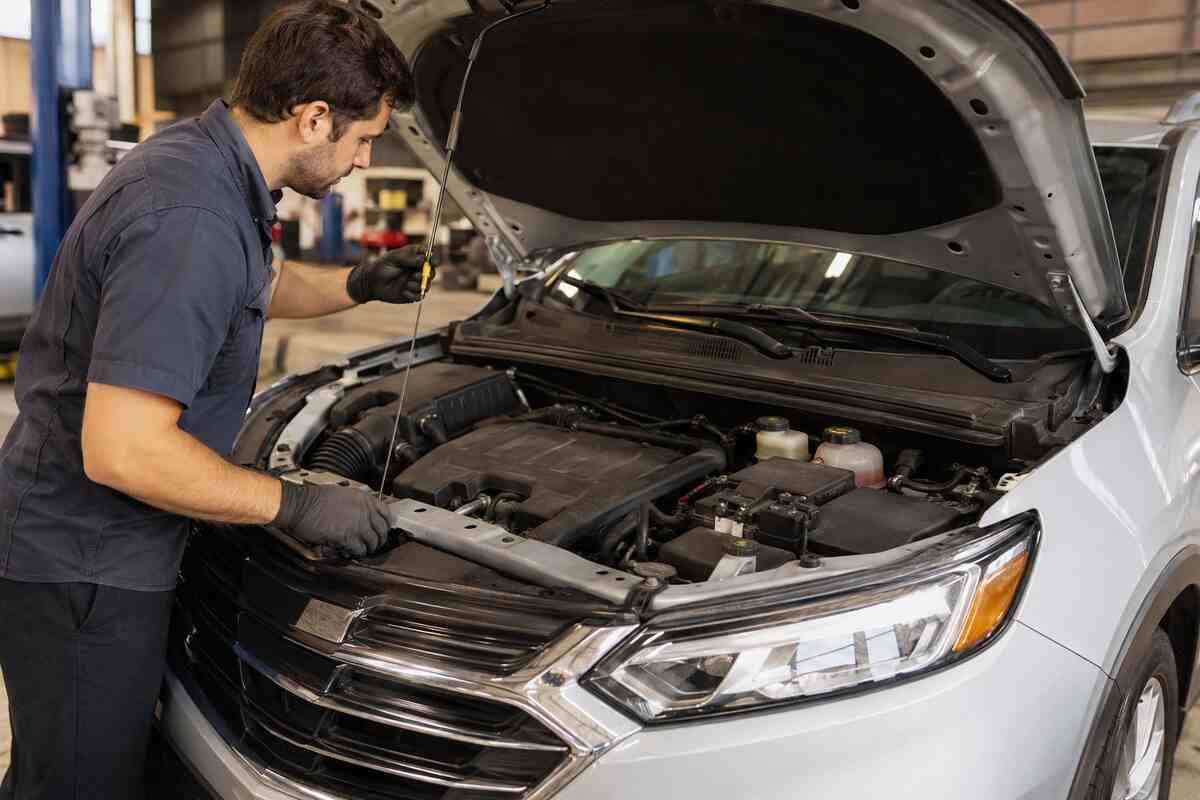
- Pull the dipstick yourself. Check oil level and color in person rather than relying on the seller’s word.
- Ask for service records. Frequent oil top-offs between changes are a telling pattern.
- Get a pre-purchase inspection. A trusted mechanic can run a compression test and check for early ring wear.
- Check for blue exhaust smoke during a cold start, before the engine warms up.
- Look up the VIN for any recall or warranty extension tied to the engine.
A seller who’s upfront about maintenance history and open to an inspection is a good sign. Hesitation around these requests is worth paying attention to.
Tips to Reduce Oil Consumption Over Time
If you already own one of these model years, a few habits can help slow the problem rather than let it worsen:
- Check oil levels every couple of weeks, not just at scheduled changes
- Use the oil weight GM specifies for your exact model year
- Keep up with oil changes on schedule, since degraded oil accelerates wear
- Address any related TSB or warranty repairs promptly
- Avoid prolonged idling or frequent short trips, which contribute to carbon buildup around piston rings
None of these steps fully resolve a design-related issue, but they can meaningfully slow how quickly oil consumption progresses.
FAQs
What years of Chevy Equinox have oil consumption problems?
Mainly 2010 through 2017, all equipped with the 2.4L four-cylinder engine. The 2010 to 2013 models saw the most complaints.
How much oil consumption is normal?
Most engines use a small amount of oil between changes. Needing to add oil every 1,000 to 2,000 miles points to a mechanical issue like worn piston rings, not normal wear.
Did GM recall the Equinox for this issue?
Not through a traditional recall. GM extended emissions-related warranty coverage on affected engines and issued technical service bulletins. A related class-action settlement also covered some repair costs for eligible owners.
Is it safe to buy a used Equinox from these years?
Yes, with some caution. Check oil levels, review service history, and get a pre-purchase inspection. Many affected vehicles were already repaired under warranty and no longer have issues.
Which Equinox years are the safest to buy?
2018 and newer. GM moved to updated engine options that don’t share the same oil consumption complaints as the earlier 2.4L models.
Conclusion
Oil consumption tied to the 2.4L engine is the main reason the Chevy Equinox shows up on so many years-to-avoid lists. But with the right checks, service history, and a mechanic’s opinion, an older Equinox can still be a solid buy. If you’d rather avoid the issue altogether, 2018 or newer is the safer route. Either way, you now know exactly which Chevy Equinox years to avoid and how to shop around them with confidence.