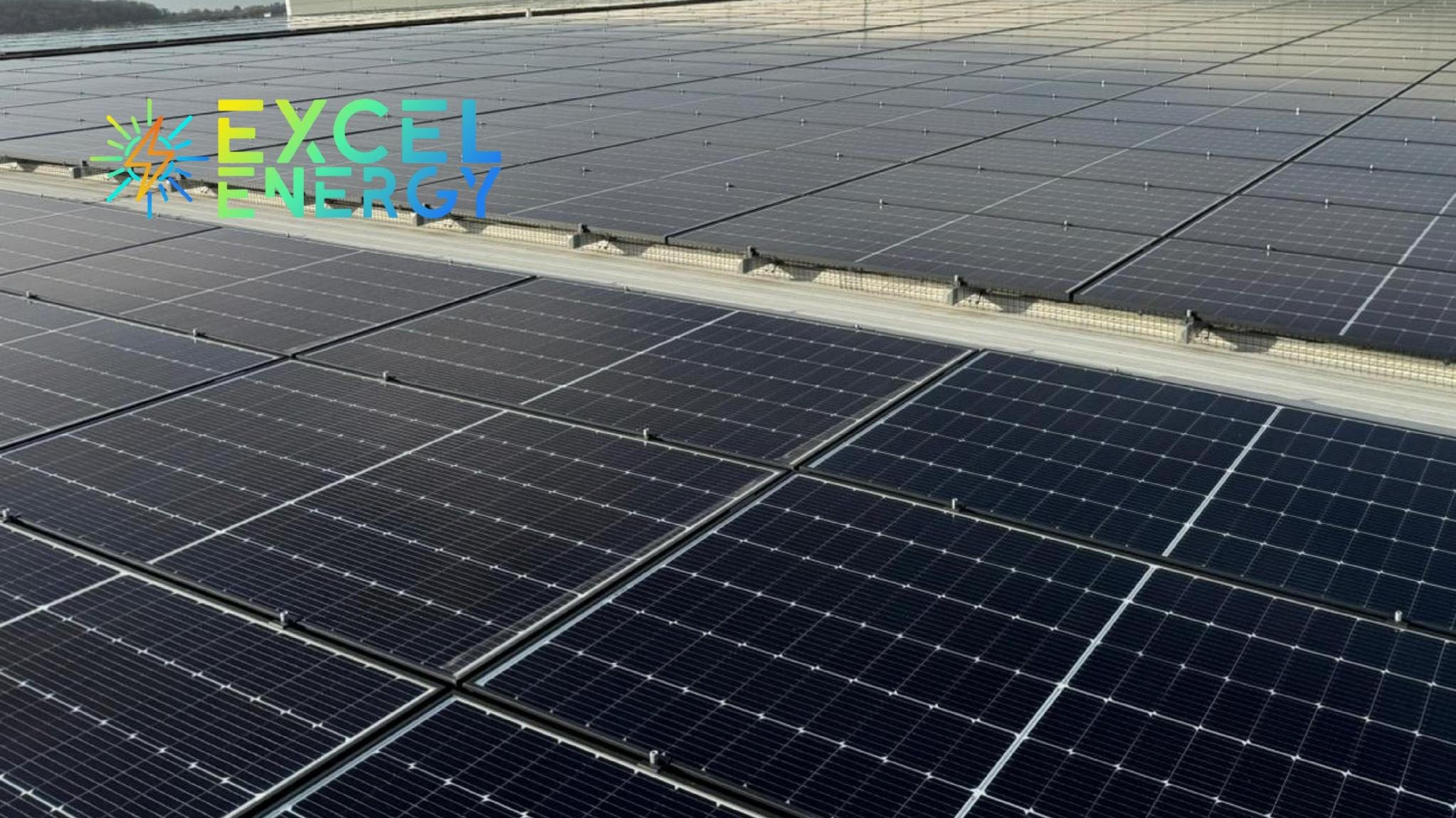
A commercial solar installation cuts a UK business’s electricity bills by around 40-70%, brings in extra income from power exported to the grid, and usually pays for itself within four to eight years – yet myths about cost, weather and red tape still put firms off. The truth is simpler and far more appealing: with today’s panel prices, generous tax relief and a strong export scheme, commercial solar panels are now one of the safest investments a British business can make in its own future.
Solar has picked up a fair share of misconceptions over the years. “It doesn’t work in British weather.” “It’s far too expensive.” “The paperwork is a nightmare.” None of these holds up in 2026. So, let’s set the record straight, bust the biggest myths, and show you exactly what commercial solar can do for your firm.
-
Myth vs reality: the quick version
| The myth | The reality |
| Solar doesn’t work in the UK climate | Panels run on daylight, not heat. UK sites generate plenty of power across the year, especially March to October. |
| It’s only for huge companies | Solar panels for business suit shops, offices, farms and warehouses alike – systems scale to your roof and budget. |
| The upfront cost is too high | Tax relief and finance routes such as PPAs cut the real cost sharply, sometimes to zero up front. |
| You’ll be tangled in red tape | A good commercial solar installer handles the grid application and approvals for you. |
| There’s no money in exporting power | The Smart Export Guarantee pays you for every surplus unit you send to the grid. |
Sources: Ofgem; GOV.UK business energy guidance; UK solar industry market data.
-
Fact 1: The sums genuinely add up
Let’s talk numbers, because that’s what matters. A commercial solar installation earns its keep two ways – by replacing power you’d otherwise buy, and by paying you for power you export.
Self-generated electricity is the bigger prize. Every unit you generate and consume on site saves you the full commercial rate, roughly 24–28p per kWh. Exported units earn the Smart Export Guarantee (SEG) rate, typically 3–15p per kWh, paid by larger suppliers under Ofgem rules. To unlock those export payments, your system must be MCS-accredited – so always use an accredited firm.
Here’s how installed costs and returns tend to look across the UK in 2026:
| System size | Typical premises | Installed cost | Payback window |
| 10-30 kW | Retail unit, small office | £12,000 – £40,000 | 5-8 years |
| 50-100 kW | Warehouse, workshop | £50,000 – £100,000 | 4-7 years |
| 150 kW+ | Factory, logistics hub | £120,000 – £200,000+ | 4-6 years |
Indicative UK ranges for 2026; actual figures depend on roof, access and equipment. Sources: industry market data; GOV.UK.
After the system pays for itself, you’re looking at 20-plus more years of low-cost power. That’s a long stretch of protection from whatever the energy market throws at you.
-
Fact 2: There’s more help available than you think
Many owners assume the only support is a direct government grant. Not so. The UK Shared Prosperity Fund – once the main source of solar panel grants for SMEs – closed to new applicants on 31 March 2026, but several strong options remain, and most flow through the tax system.
| Support | Who qualifies | What it’s worth |
| Annual Investment Allowance (AIA) | Nearly all UK businesses | Deduct 100% of the cost from taxable profits, up to £1m, a £100k system saves around £25k in corporation tax at 25% |
| First-Year Allowances | Buyers of listed energy kit | 100% first-year relief on qualifying equipment on the Energy Technology List |
| Local Growth Fund | Firms in 11 Mayoral Strategic Authority areas (North and Midlands) | Regional capital support, rolling out from April 2026 |
| Salix Finance | Public sector bodies | Interest-free loans repaid from energy savings |
| Rural funding | Rural businesses | Around 25-50% of project costs, awards near £5k-£50k |
Funding changes regularly – verify with the GOV.UK finance finder or your local authority. Sources: GOV.UK; Salix Finance.
And if you’d rather not spend a penny up front, a Power Purchase Agreement (PPA) lets a third party fund, own and maintain the commercial solar panel installation while you buy the power at a lower fixed price. Click here and Excel UK will match the right commercial solar panel grants and finance to your accounts.
-
Fact 3: Installation is faster and tidier than you’d expect
Worried about disruption? Most jobs are quick and clean. A reliable commercial solar installer runs the project like this:
- Survey – checking your roof, your half-hourly usage and your grid connection.
- Design and quote – clear figures on output, savings, payback and funding.
- Approvals – your installer handles the grid application and any planning checks.
- Install – usually days to a few weeks, with minimal interruption to trading.
- Commission and monitor – certified to MCS standards and connected to a live savings app.
For sites that use power into the evening, commercial solar battery storage stores daytime generation so you rely on the grid even less.
-
How to pick a solar energy company you can trust
Standards vary across solar energy companies, so do your homework:
- MCS accreditation – essential for your warranty and your export payments.
- A real commercial record – ask for case studies on premises like yours. Firms fitting commercial solar panels every week spot problems others miss.
- Honest, data-led figures – savings should come from your actual consumption.
- Solid aftercare – clear warranties and a commercial solar maintenance plan.
- Everything in writing – guarantees and grant support documented properly.
Collect two or three commercial solar quotes and compare panels, inverters and warranties side by side.
-
Why businesses choose Excel Energy UK
Excel Energy UK delivers commercial solar installation UK projects across every sector, from independent retailers to national operators. Each system is MCS-accredited, every quote is built from your real usage, and our in-house engineers run the job from survey to switch-on. We also lay out the tax relief, grants and finance routes plainly, so you claim everything you’re entitled to.
As a dedicated UK solar energy company, Excel UK knows the regional schemes, the grid process and the practicalities of working on a live commercial site. That’s why firms trust us for commercial solar panel installation UK projects that land on budget and start saving from the off.
-
Frequently asked questions
Do commercial solar panels work in winter? Yes. Output dips on the shortest days but the system generates year-round, with the bulk of production from spring to autumn.
Is solar worth it for a small business? Often, yes – solar panels for business scale to any roof, and even modest systems deliver strong savings.
How long do panels last? Typically 25-30 years, with most performance warranties running to at least 25.
Will I need planning permission? Many rooftop systems fall under permitted development; your installer will confirm for your site.
-
Ready to stop overpaying?
Every quarter without solar is another bill you didn’t have to pay in full. Get a free, tailored assessment of your savings, payback and funding from Excel Energy UK.