
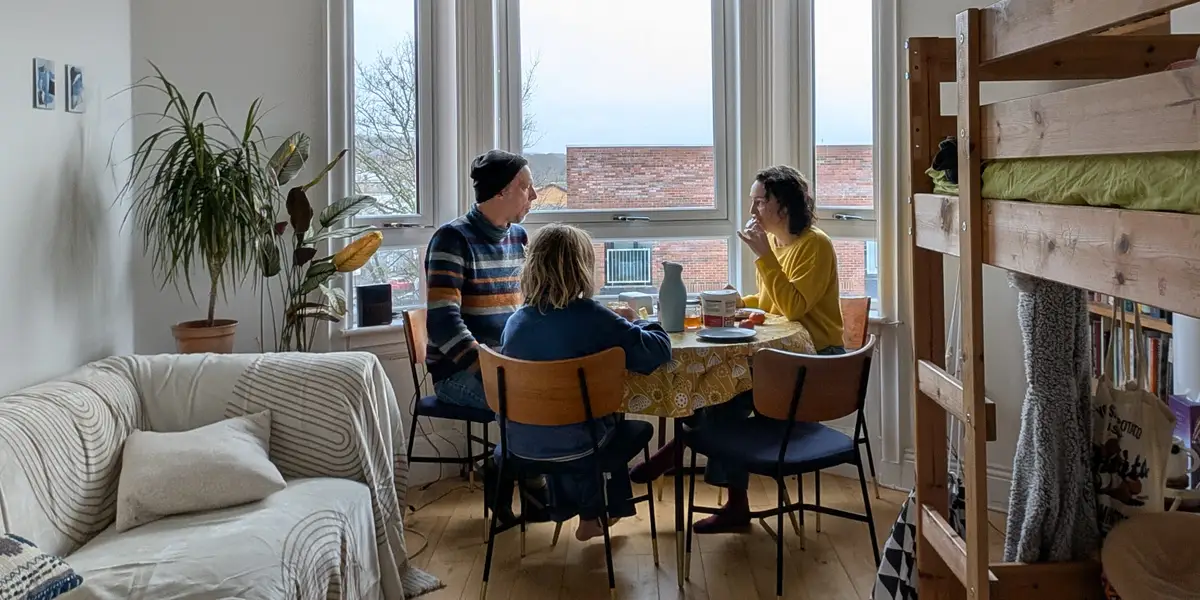
The perfect apartment for a young family is not the one with the prettiest photos. It is the one that makes ordinary days easier. It supports the school run, gives children a safe place to sleep and play, keeps noise under control, and does not punish parents with poor storage, awkward stairs, or damp corners every winter.
Many young families in the UK search for a home by looking first at price, bedroom count, and postcode. Those details matter, but they do not tell the full story. A two-bedroom flat near a park, nursery, GP surgery, and train station can work better than a larger flat on a busy road with no lift and no storage. A modest apartment with a bath, good light, and a sensible hallway can beat a stylish new-build that leaves the buggy blocking the front door.
The right family apartment should be judged by daily life. Can you get a tired toddler inside without carrying a buggy up three flights of stairs? Can one parent cook while another takes a work call? Can children sleep while the washing machine runs? Can you dry clothes without making the windows wet? Can everyone leave the house at 8:15 without stepping over shoes, coats, scooters, and school bags?
A family home is not only a place to live. It is a machine for mornings, meals, naps, homework, bath time, laundry, and recovery after long days. When that machine works, family life feels lighter. When it fails, even a beautiful apartment becomes hard work.
1. Choose the Location by the Week, Not the Weekend
A good family apartment starts with the surrounding streets. The area should help the family move through the week with less pressure. Weekend cafés and smart shops are pleasant, but they matter less than safe pavements, short errands, school access, and reliable transport.
A young family should first map the daily routine. Nursery or primary school should be within a manageable walk, drive, or bus ride. A nearby GP surgery, pharmacy, supermarket, and small green space can save hours each month. A local library, leisure centre, soft play venue, or community hall can make rainy days easier, especially in winter.
School access deserves early attention. Families with babies often delay this question, but school catchments can shape the whole housing decision. A flat that works for two years may become a problem when the child reaches reception age. Parents should check nearby schools, walking routes, admissions pressure, and whether the location is likely to remain practical as children grow.
Transport should be judged by real use, not by estate agent wording. “Close to transport links” can mean a ten-minute walk to a station with poor step-free access, limited trains, or unsafe roads at night. A flat near a bus stop may be more useful than one near a train station if nursery, work, and family support are all on local routes. In London, access to the Elizabeth line, Overground, Tube, or strong bus corridors can matter more than being closer to the centre. In Manchester, Leeds, Bristol, Cardiff, Glasgow, Birmingham, or Newcastle, a reliable tram, rail, or bus link can change the value of a smaller flat.
Noise should be checked at different times. A quiet street at 11 in the morning may change at 6 in the evening, when traffic builds and delivery bikes arrive. A flat above shops can be useful, but late-night takeaways, pubs, gyms, and convenience stores can create noise, smells, and deliveries. Railway lines, main roads, school gates, loading bays, and student-heavy streets can all affect sleep.
Parents should also look at pavement quality. This sounds minor until a pram wheel hits broken paving in the rain. Safe crossings, street lighting, dropped kerbs, and traffic speed matter. A walkable neighbourhood should feel manageable while pushing a buggy, holding a small child’s hand, and carrying shopping.
Green space does not need to mean a large private garden. Many UK families live well in apartments because they have a park, common, canal path, seafront, or playground nearby. The key is distance and usability. A park fifteen minutes away across two dangerous roads may not help on a hard afternoon. A small playground five minutes away can become part of the family’s rhythm.
The best location is often less glamorous than expected. It may be a calm residential pocket near a primary school, bus route, and ordinary high street. It may lack the buzz of a fashionable area, but it gives parents what they need most, fewer daily battles.
2. Pick the Size by Behaviour, Not Only Bedrooms
Bedroom count is useful, but it does not explain how a flat will function. A family apartment should be judged by how people move, store things, cook, rest, and recover. A badly shaped three-bedroom apartment can feel worse than a well-planned two-bedroom flat.
A young family with one child can often live comfortably in a two-bedroom apartment if the layout is strong. The second bedroom needs enough space for a bed, wardrobe, books, toys, and later a small desk. A box room may work for a baby, but it can become tight once the child grows. Parents should think beyond the cost stage.
A family with two children may need a large two-bedroom apartment or a three-bedroom flat. Shared bedrooms can work well, especially when children are young, but the room must allow storage and sleep. A narrow room with two beds and no floor space can create tension. Bunk beds may solve part of the problem later, but they do not replace storage.
Remote work has changed the family apartment. Many parents now need at least a quiet corner for calls, admin, or evening work. A dining table can work for occasional use, but it becomes stressful when it must also handle meals, crafts, homework, and laundry folding. A small third bedroom, wide hallway niche, alcove, or properly planned living room corner can make a major difference.
Storage is one of the most important features in a family flat. Children bring equipment. Prams, scooters, balance bikes, coats, boots, school bags, uniforms, toys, nappies, wipes, medicines, bedding, seasonal clothes, and birthday presents all need homes. Without storage, the apartment shrinks month by month.
A hallway should not be dismissed as wasted space. In a family flat, it is a landing zone. It needs room for shoes, coats, bags, and perhaps a folded buggy. A tiny entrance that opens straight into the living room may look neat when empty, but it can become chaotic after one wet school run.
Built-in cupboards are valuable because they reduce visible clutter. A cupboard near the entrance can hold coats and cleaning supplies. A tall cupboard near the bathroom can hold towels and laundry baskets. Bedroom wardrobes should be deep enough for real use, not just decorative storage.
The floor level matters. A ground-floor flat can be practical for prams, shopping, and quick exits. It may also raise concerns about privacy, street noise, security, and dampness. A first-floor flat can be a good compromise if stairs are manageable. A third-floor flat without a lift can become exhausting with a toddler, buggy, weekly food shop, and sleeping baby.
A lift is not a luxury for many families. It can decide whether the flat works. Parents should check lift size, reliability, and whether it can fit a buggy without folding. In older UK blocks, lifts may be small or absent. In new-builds, lifts are common, but service charges can be higher.
Outdoor space should be judged honestly. A private balcony can help with fresh air, herbs, drying small items, and a quiet cup of coffee. It is not a garden, but it adds breathing room. A shared garden can be useful if it is safe, maintained, and actually used by families. Some shared gardens look good in listings but feel awkward because residents do not use them or rules are unclear.
The right size is the size that lets the family function without constant rearranging. A perfect apartment should not require parents to move six objects before opening a cupboard, folding a buggy, or putting a child to bed.
3. Make the Layout Do the Hard Work
Layout decides whether an apartment feels calm or cramped. A good layout creates zones for sleep, noise, cooking, play, work, and washing. A poor layout makes every activity spill into every other activity.
Bedrooms should ideally sit away from the loudest part of the flat. If the children’s bedroom shares a wall with the living room, evening noise can disturb sleep. If bedrooms face a busy road, blackout curtains may not solve the sound problem. Internal position, wall thickness, window quality, and room shape all matter.
The living room should have a clear purpose. In a family apartment, it usually works as a sitting room, playroom, dining room, and sometimes office. That is a lot to ask from one space. A wide rectangular room often works better than a long narrow one because it allows zones. One side can hold the sofa and TV, another can hold toy storage, and another can fit a dining table.
Open-plan living has clear advantages. Parents can cook while watching children. The space can feel brighter and more social. Babies and toddlers often suit open-plan layouts because supervision is easier. For smaller flats, open-plan rooms can also reduce wasted corridors.
Open-plan living also has limits. Cooking smells spread. Toys are always visible. A dishwasher, extractor fan, or boiling kettle can disturb a child watching television or a parent taking a call. Once children go to bed, adults may want a quieter space that does not still feel like a playroom.
A separate kitchen can work well for families. It keeps cooking mess out of the living area, makes safety easier, and gives parents the option to close a door. A separate kitchen also helps when one parent cooks while the other keeps the living room calm. The downside is that it can isolate the cook, especially with very young children.
A kitchen-diner can be a strong middle option. It allows meals, homework, and crafts to happen near the kitchen without taking over the sitting area. It can also make the living room feel more restful. In older UK flats, a kitchen-diner may be rare, but when it exists, it can be valuable.
The bathroom should sit in a practical position. A bathroom far from the children’s bedroom can make night-time routines harder. A bathroom that opens directly into the living room can feel awkward when guests visit. A bathroom near bedrooms usually works best.
The children’s room needs careful planning. A cot may make the room look generous, but a bed, wardrobe, toy shelves, and books change the picture. Parents should check where furniture will go, where sockets are placed, and whether the room has enough wall space. Radiators, doors, chimney breasts, and awkward corners can limit usable space.
The parents’ bedroom should not become the storage room by default. Many families sacrifice the adult bedroom first, filling it with laundry, boxes, spare nappies, paperwork, and suitcases. That creates long-term fatigue. Parents need a room that supports rest, not another overflow cupboard.
Light matters in every layout decision. Many UK flats struggle with grey winter days, north-facing rooms, or neighbouring buildings that block light. A bright living room can improve daily mood and reduce the need for artificial light. A darker bedroom may be fine for sleep, but a dark living space can feel heavy during long winters.
The best layout reduces collisions. Children can play without blocking the kitchen. Parents can cook without stepping over toys. Laundry has a place to wait. Work calls can happen without taking over the whole home. Bedtime does not require silence across the entire flat.
4. Treat the Bathroom, Kitchen, and Laundry as Family Infrastructure
A family apartment depends on practical rooms. Bathrooms, kitchens, and laundry areas carry the weight of daily life. Stylish finishes matter less than ventilation, safety, durability, and space for repetitive tasks.
A bath is usually better than a shower-only bathroom for young children. Babies, toddlers, and small children are easier to wash in a bath. A bath with an overhead shower gives adults and children more options. A walk-in shower may look modern, but many parents regret losing the bath during the early years.
An extra WC can be more useful than an en-suite in some family flats. One bathroom can work, especially with one young child, but queues become real as children grow. A second toilet helps during mornings, illness, toilet training, and visits from grandparents. If the flat has only one bathroom, it should be large enough to use comfortably and ventilate properly.
Bathroom ventilation is not optional. Many UK flats suffer from condensation and mold because bathrooms lack windows or have weak extractor fans. Parents should check the ceiling, grout, sealant, window frames, and corners. Black spots may signal poor airflow. A bathroom that stays damp can affect health, smell, and maintenance costs.
Non-slip flooring is important with children. Shiny tiles may look clean in photos, but they can become slippery after bath time. Easy-clean walls and simple fittings usually work better than decorative materials that stain, chip, or trap moisture.
The kitchen should support safe movement. A cooker placed beside a main walkway can be risky with small children. Sharp corners, low ovens, boiling pans, and trailing appliance cables all need attention. A clear kitchen path helps parents cook without constantly moving children away.
A full-size fridge-freezer can matter more than a wine fridge or display shelves. Families need space for milk, lunch items, leftovers, fruit, vegetables, batch cooking, and frozen meals. Small under-counter fridges may suit a single person, but they often frustrate families.
A dishwasher is not essential, but it can change evenings. Without one, washing-up competes with bath time, bedtime, and work. If there is no dishwasher, the sink, draining space, and cupboard layout need to be strong.
Worktop space should be tested mentally. Parents prepare snacks, packed lunches, formula, coffee, school water bottles, and meals in short bursts. A kitchen with high-end finishes but little clear worktop will frustrate daily use.
Laundry is one of the hardest parts of apartment living. Many UK flats have no utility room, no outdoor drying area, and limited ventilation. A washer-dryer may help, but it can be slow and expensive to run. A heated airer needs floor space. Clothes horses in the living room can make a flat feel crowded and damp.
A ventilated laundry cupboard can be a quiet advantage. Space for a laundry basket, cleaning products, mop, vacuum, and airer can keep the rest of the home calmer. Without it, these items drift into bedrooms and hallways.
Heating and insulation affect family comfort and cost. Parents should check the EPC rating, boiler age, radiator positions, window quality, and signs of drought. A flat with poor insulation may feel cheap at first but expensive every winter. Cold bedrooms can disrupt sleep. Condensation can damage clothes, books, and furniture.
Mould checks should be serious. Look behind curtains, around window frames, inside wardrobes, behind large furniture, and along external walls. A freshly painted wall may hide a problem. Ask direct questions about ventilation, leaks, past repairs, and building maintenance.
The practical rooms should be boring in the best way. They should work every day, clean easily, and avoid drama. A family flat can forgive a plain bathroom or modest kitchen. It cannot forgive constant damp, unsafe cooking space, or nowhere to dry clothes.
5. Use Colour and Materials to Create Calm, Not a Show Home
Colour affects how a family apartment feels. It can make small rooms feel lighter, help children settle, and reduce visual noise. The best family colour schemes are calm, washable, and easy to update.
Warm whites, soft greys, muted greens, pale blues, clay tones, beige, and gentle neutrals often work well in UK flats. They reflect limited winter light without making rooms feel cold. Very stark white can feel harsh under grey skies, while very dark walls can shrink small rooms unless used carefully.
Children’s rooms do not need loud themes. A calm base colour can stay in place for years, while bedding, prints, rugs, and shelves add personality. Dinosaurs, football, space, animals, or fairies can appear through items that are easy to change. This avoids repainting every time a child’s interests change.
The living room should balance adult taste with family use. Washable paint is worth choosing. Sticky fingers, scooter marks, toy scratches, and food splashes are normal. A wipeable finish in hallways and dining areas can save frustration.
Furniture should reduce risk and clutter. Rounded edges are better than sharp glass coffee tables. Closed storage hides toys faster than open shelves. Sofas should have fabric that can handle spills. Removable covers can be useful, especially with babies and small children.
Flooring should match room function. Carpets can make bedrooms warmer and quieter. Hard flooring works well in kitchens, dining areas, and play zones because it cleans more easily. Rugs can soften hard floors, but they should be washable or low enough to avoid trips.
Acoustic comfort matters in flats. Children run, drop toys, cry, laugh, and wake early. Thick rugs, curtains, upholstered furniture, and bookcases can soften sound. Parents should also think about neighbours below, beside, and above. A beautiful flat with poor soundproofing can create stress for everyone.
Lighting should not depend only on one ceiling bulb. A living room needs layers, such as lamps, wall lights, and softer bulbs. Bedrooms need calm lighting for bedtime. Hallways need enough light for night trips to the bathroom. A small night light can prevent accidents without waking everyone.
Window coverings should support sleep and privacy. Blackout blinds or curtains can help with early summer mornings and streetlights. In ground-floor flats, privacy film or layered curtains may be needed. Parents should check whether windows are safe, lockable, and easy to ventilate.
Materials should be chosen for repair, not perfection. Family life marks a home. A table that can handle colouring, snacks, homework, and laptop work is more useful than a delicate piece that causes constant worry. Some families even look at commercial tables for dining areas because they want strong surfaces that can handle heavy daily use without looking precious.
A family apartment should not feel like a nursery. Adults live there too. The best design gives children freedom while preserving a sense of order. That usually means calm walls, strong storage, durable furniture, and a few personal details that make the flat feel lived in rather than staged.
6. Test the Apartment Against the Next Five Years
A perfect apartment should grow with the family. It should not only suit the current stage. Babies become toddlers. Toddlers start school. School bags, scooters, homework, hobbies, friends, and sleepovers arrive quickly.
Parents should ask whether the flat can handle the next five years. Can the children share a room if needed? Is there a place for homework? Can one parent work from home without using the bed? Is there enough storage for uniforms, sports kits, winter coats, and toys? Can a grandparent stay for a night, even on a sofa bed?
The neighbourhood should also pass the five-year test. A nursery nearby is useful now, but primary school may matter soon. A park for toddlers should also offer space for older children to run. A high street should provide more than coffee. Pharmacies, dentists, supermarkets, barbers, opticians, and post offices still matter to family life.
The budget should include more than rent or mortgage. Service charges, ground rent, council tax, energy bills, parking permits, insurance, repairs, and transport costs all shape affordability. A cheaper flat with high heating costs and poor transport may not be cheaper in real life.
Leasehold details matter in England and Wales. Parents buying a flat should understand lease length, service charges, major works, building insurance, ground rent terms, and restrictions. Fire safety issues, cladding concerns, and building maintenance can affect costs and resale. A solicitor should review these points carefully before purchase.
Building management can affect daily comfort. Bin stores should be clean and easy to reach. Bike storage should be secure. Entry systems should work. Communal areas should be maintained. Lifts should be reliable. Poor management can turn a decent flat into a constant irritation.
The neighbourhood mix is worth observing. Families do not need to live only beside other families, but the building should suit children. Thin walls, party-heavy neighbours, short-term lets, or neglected communal areas can create stress. Visiting at different times helps reveal the real atmosphere.
Security should be practical. Parents should check locks, entry doors, lighting, window safety, balcony railings, and access points. Ground-floor flats need special attention. A safe home should allow ventilation without creating obvious risk.
Pets may matter now or later. Some leases or rental agreements restrict pets. Families who already have a dog or cat, or may want one, should check the rules early. Nearby green space, flooring, and building policy all matter.
Red flags should not be ignored. No storage is a serious problem. Shower-only bathrooms can be difficult with very young children. Poor ventilation can lead to mold. A long school run will wear down the week. High service charges can strain the budget. A noisy street can damage sleep. A flat that looks excellent online may fail the family test in person.
The final decision should be made slowly enough to notice ordinary details. Open cupboards. Stand in the hallway. Turn on taps. Listen near the windows. Check mobile signals. Look for dampness. Measure bedrooms. Walk to the nearest park. Try the school run route at the right time of day. Notice where coats, shoes, bags, and laundry would go.
The perfect apartment for a young family in the UK is not one fixed type of home. It may be a Victorian conversion near a park, a modern flat by a transport line, a maisonette with its own door, or a modest apartment above a quiet parade of shops. The form matters less than the way it supports family life.
A good family apartment shortens hard mornings. It gives children a safe place to sleep, play, wash, and grow. It gives parents storage, light, warmth, and enough order to keep going. It does not need to impress everyone. It needs to work for the people who come home to it every day.