
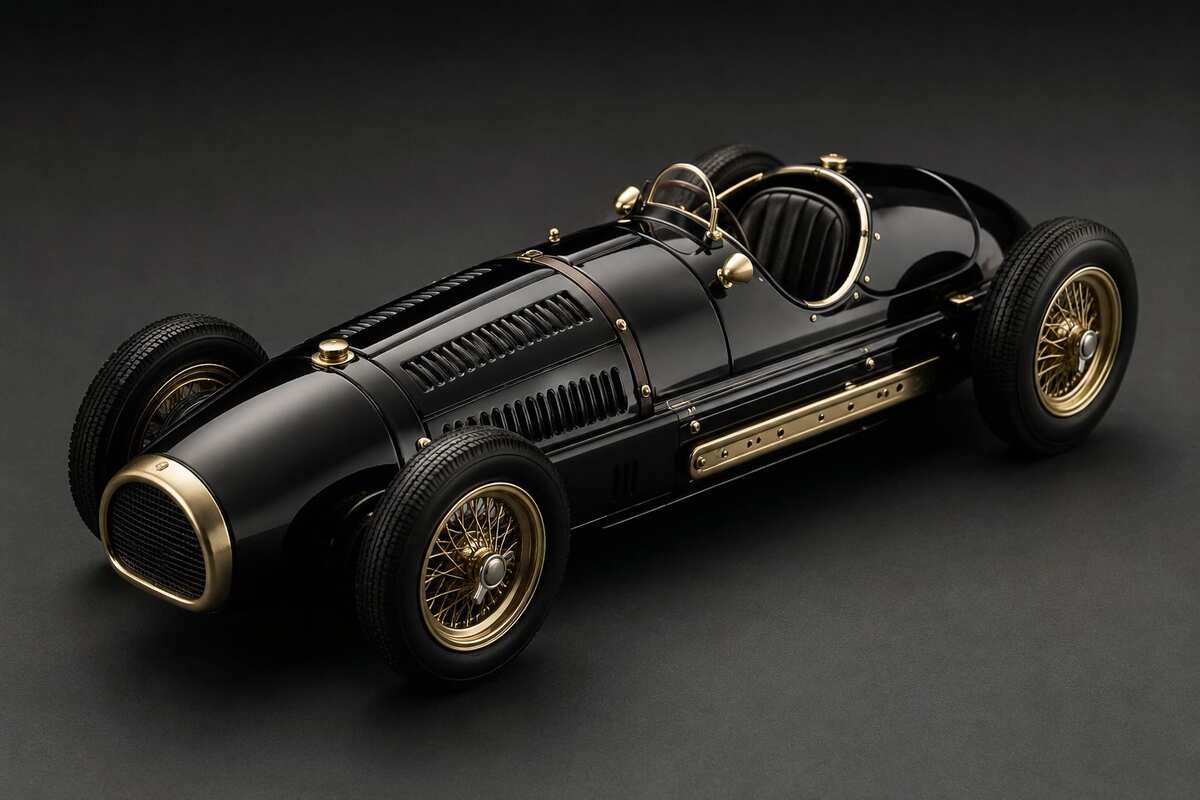
The CNC 102 Modena Grand Prix Black is a hand-finished, precision-machined car model built for display, not play. If you’ve come across this piece and want to understand what actually goes into making it, and whether the craftsmanship justifies the price, here’s a clear look at the process.
This guide covers how the CNC 102 Modena Grand Prix Black is made, the materials used, how it compares to other finishes in Playforever’s CNC series, and whether it’s worth the investment.
What Is the CNC 102 Modena Grand Prix Black?
The CNC 102 Modena Grand Prix Black is a limited-edition design piece from Playforever’s CNC program, a line built around the idea that a car model can also be a genuine collectible. Unlike mass-produced die-cast models, this piece is machined from solid material rather than poured into a mold, which changes how it looks, feels, and ages.
It belongs to the Modena Grand Prix family, alongside variants like the CNC 103 in orange and walnut finishes. The black edition leans into a sleek, automotive-showroom look: glossy, minimal, and clearly built for display.
The Story Behind Playforever’s Modena Design
The Modena Grand Prix wasn’t designed as a toy first. It came from founder Julian Meagher’s approach to treating industrial fabrication as a form of art, the same way a furniture designer might treat a chair or a sculptor might treat a bronze cast.
Its shape draws on classic grand prix racing silhouettes: long, low, and rounded, without the sharp plastic seams typical of a standard toy car. It’s also larger than most pieces in Playforever’s catalog, which gives the craftsmanship more surface area to show.
How the CNC Machining Process Works
CNC stands for computer numerical control. Instead of pouring liquid material into a mold, a CNC machine carves the shape directly out of a solid block, guided by a digital design file. This is what makes the piece feel closer to a manufactured art object than a typical injection-molded toy.
A few things this process changes:
- Precision: every curve is cut to exact digital specifications, so there’s no mold warping or inconsistency between units
- Material integrity: the body starts as one solid block, so there are no seams or weak points where mold pieces would normally join
- Detail retention: subtle design elements that would get lost in mass production stay sharp and intentional
It’s a slower, more expensive process than standard toy manufacturing, which is a large part of why pieces like this are positioned as collectibles.
Solid ABS Body: Sanding, Painting and UV Coating
The body starts as a solid block of ABS, a durable plastic that holds detail well under machining. Once the CNC process shapes it into the Modena’s silhouette, the hand-finishing begins.
The body is sanded by hand to smooth out machining marks and create an even surface. It’s then finished with automotive-grade paint, the same category of coating used on real cars, giving the black finish its deep, uniform tone instead of a flat plastic sheen. A final UV coating adds shine and helps protect the paint from fading or scratching.
This combination of solid-block construction and automotive paint is why the piece looks closer to a scale-model showpiece than a children’s toy, both in photos and in person.
Brass Trim Detailing: Precision Cut and Polished
The trim on the CNC 102 Modena Grand Prix Black isn’t painted plastic. It’s solid brass, cut using the same CNC precision as the body.
After cutting, the brass is sanded to remove tool marks and polished to a near-diamond finish. It’s left untreated rather than lacquered, so the metal naturally tarnishes and develops a patina over time. For collectors, this is a feature rather than a flaw. It means the piece changes subtly with age, similar to vintage car trim or aged brass fittings.
Handcrafted Wheels and the Slow-Casting Process
The wheels complete the craftsmanship story. Instead of hard plastic wheels typical of most toy cars, the Modena Grand Prix uses solid rubber wheels made through a slow-casting process.
This method takes longer than standard injection molding, but it produces a smoother, more detailed finish and a more premium feel when handled or displayed. It’s a small detail, but it fits the pattern of the rest of the piece: nothing here was simplified to cut costs.
Why the Black Finish Stands Out in the CNC Series
Playforever’s CNC series comes in a few finishes, and the black edition has a distinct appeal. Where the orange variant feels playful and the walnut edition feels warm and natural, the CNC 102 Modena Grand Prix Black feels closer to monochrome sculpture than a bright collectible.
The glossy black paint also does a better job of highlighting the brass trim by contrast, which is where much of the piece’s visual interest comes from. For a modern, minimalist space, black is usually the easiest finish to style around.
Does the Craftsmanship Justify the Price?
At a price point in the thousands of dollars, it’s fair to ask whether this is genuinely worth it or just clever branding. Based on the construction alone, there’s a solid case for the former.
Here’s what the price actually covers:
- Solid-block CNC machining instead of injection molding
- Automotive-grade paint and UV coating, applied by hand
- Solid brass trim, precision-cut and hand-polished
- Slow-cast solid rubber wheels
- Limited-edition production rather than mass manufacturing
A typical high-end die-cast model might cost a few hundred dollars, but it relies on molded plastic and mass-production techniques throughout. The price gap reflects a genuinely different manufacturing process, not just branding.
That said, this is a design object first and a toy second. If you’re looking for functional play value, this isn’t the right product category. It’s built for display.
CNC 102 Modena Grand Prix Black vs Other CNC Models
If you’re deciding between finishes, here’s how the black edition compares to the rest of the CNC series:
- CNC 102 Modena Grand Prix Black: glossy automotive black paint with brass trim, the most minimalist and versatile option for modern interiors
- CNC 103 Modena Grand Prix Orange: same construction process, with a bolder color for a stronger statement piece
- CNC 103 Walnut Modena Grand Prix: wood-toned finish with a warmer, more organic feel
All three share the same CNC machining foundation, hand-finishing process, and brass detailing. The real difference is aesthetic, so the choice usually comes down to what fits your space.
Who Should Collect This Heirloom Design Piece?
This piece appeals to a specific type of buyer rather than a general audience. It’s a strong fit if you:
- Collect design objects or limited-edition pieces rather than traditional toys
- Appreciate automotive design and racing heritage
- Want a statement piece for a shelf, desk, or display case
- Value craftsmanship and materials over mass-market branding
It’s less suited to anyone looking for a functional toy for a child or a budget-friendly decorative item. This is squarely a heirloom, display-piece purchase.
Caring for Your CNC 102 Modena Grand Prix Black
The materials involved mean care looks a little different from a standard toy or die-cast model.
- Dust regularly with a soft, dry cloth to protect the glossy paint finish
- Avoid direct, prolonged sunlight, which can affect even UV-coated paint over time
- Let the brass tarnish naturally, since this is intentional; avoid metal polish unless you want to slow the patina
- Handle the piece by the body rather than the trim to avoid pressure marks on the brass
- Store it on a stable, padded surface when not displayed, to protect the rubber wheels from flat-spotting
Cared for properly, a piece like this is built to last for decades rather than years.
FAQs
What is the CNC 102 Modena Grand Prix Black made of?
The body is machined from a solid block of ABS and finished with automotive-grade paint and a UV coating. The trim is solid brass, and the wheels are made from slow-cast solid rubber.
Why is the CNC 102 Modena Grand Prix Black so expensive?
The price reflects its manufacturing process: CNC machining from solid material, hand-sanding and painting, precision-cut brass detailing, and limited-edition production, all of which cost more than standard toy manufacturing.
Will the brass trim tarnish over time?
Yes, and it’s intentional. The brass is left untreated so it develops a natural patina, similar to vintage car trim, rather than staying artificially shiny.
Is the CNC 102 Modena Grand Prix Black suitable for kids to play with?
Not really. It’s designed and marketed as a display piece and collectible given its materials, finish, and price point.
How is the black version different from the orange or walnut editions?
All three share the same CNC construction and hand-finishing process. The difference is purely the finish: black uses glossy automotive paint, orange is a bolder color, and walnut uses a natural wood-toned material.
Where can I buy an authentic CNC 102 Modena Grand Prix Black?
It’s sold directly through Playforever’s official regional stores. Buying from the official site is the most reliable way to confirm authenticity and get accurate pricing for your region.
Conclusion
The CNC 102 Modena Grand Prix Black isn’t trying to compete with typical toy cars, and it shouldn’t be judged against them. Every part of its construction, from the solid-block CNC machining to the automotive paint, hand-polished brass, and slow-cast wheels, points to genuine craftsmanship rather than mass-production shortcuts.
Whether it’s worth the price comes down to what you value. If you’re drawn to design objects with real material integrity and a clear story behind how they’re made, the CNC 102 Modena Grand Prix Black delivers on that in a way most collectibles simply don’t.